Best hiking sandals: sole traction, weights, and trail limits
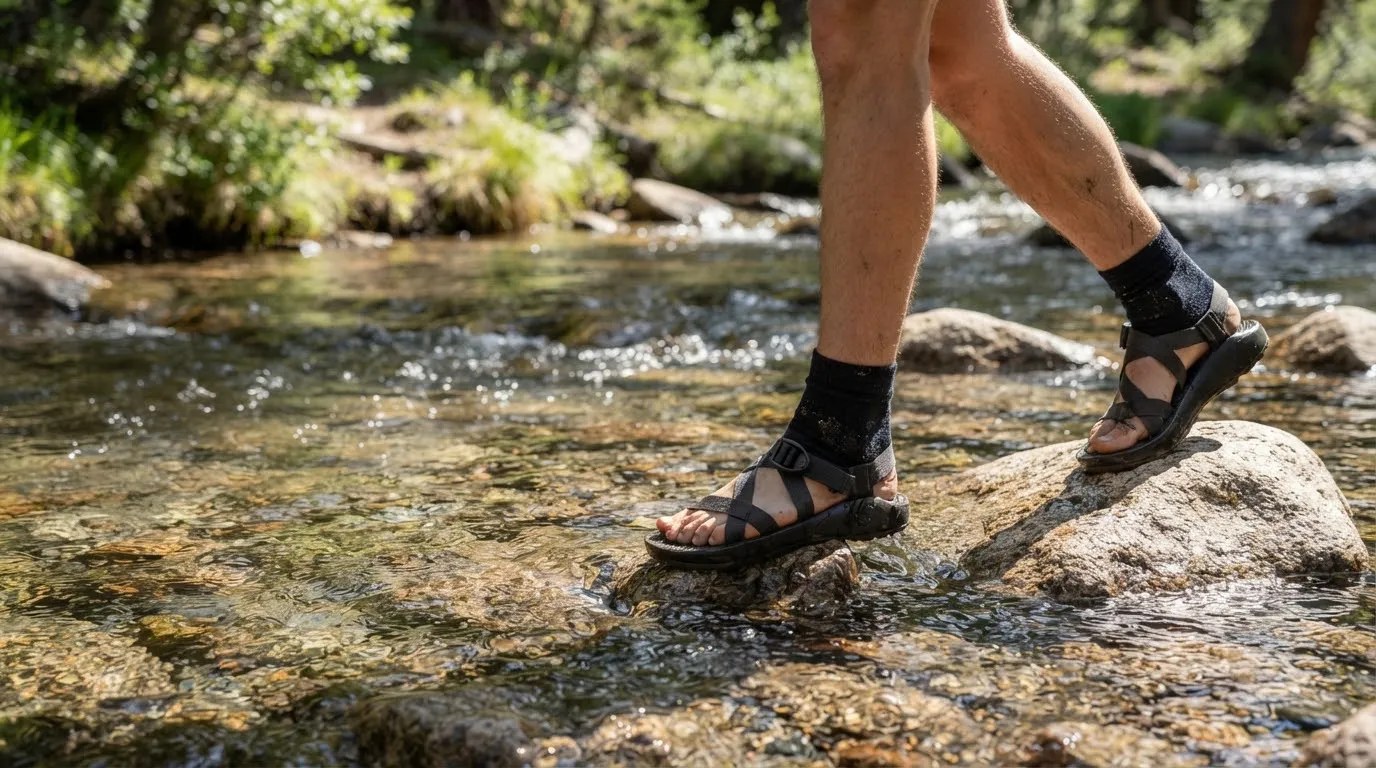
The best hiking sandals secure your heel and forefoot with non-stretch polyester or nylon webbing over a lugged rubber outsole that grips wet rock without absorbing water. For all-day trail support and river crossings, the Chaco Z/1 Classic and closed-toe KEEN Newport H2 provide thick underfoot protection, while the zero-drop Bedrock Cairn Evo and 5.4-ounce Xero Shoes Z-Trail EV serve hikers wanting minimalist ground feel or ultralight camp footwear.
Our picks
We earn a commission if you buy through these links, at no cost to you. Read our affiliate disclosure.
| Award | Product | Sole | Straps | Weight | Where to buy |
|---|---|---|---|---|---|
| Best overall | Best overallChaco Z/1 Classic | ChacoGrip non-marking rubber outsole (3.5 mm lug depth) | Continuous pull-through polyester jacquard webbing (open toe) | — | Check price at REI |
| Best minimalist Vibram trail sandal | Best minimalist Vibram trail sandalBedrock Cairn Evo | 14 mm zero-drop Vibram XS Trek EVO rubber outsole | Strap harness with adjustable heel strap | — | Check price at REI |
| Best value for day hikes | Best value for day hikesTeva Hurricane XLT2 | Rugged Durabrasion Rubber outsole with internal nylon shank | 3-point hook-and-loop 100% REPREVE recycled polyester webbing | 10.25 oz / 291 g per sandal (Men's 9), 7.75 oz / 220 g (Women's 7) | Check price at REI |
| Best closed-toe water and river sandal | Best closed-toe water and river sandalKEEN Newport H2 | Non-marking rubber outsole with multi-directional lugs and razor siping | Foam midsole with shock-absorbing, arch-supporting foam insole | — | Check price at REI |
| Best ultralight and camp sandal | Best ultralight and camp sandalXero Shoes Z-Trail EV | 11 mm zero-drop FeelLite sole with TrailFoam and dual-chevron FeelTrue rubber lugs | Quick-dry tubular recycled nylon webbing with Z-pattern adjustment | 5.4 oz / 153 g per sandal (Men's 9) | Check price at REI |
| Best cushioned heavy-duty trail sandal | Best cushioned heavy-duty trail sandalTeva Terra Fi 5 Universal | High-traction Spider Rubber outsole with internal nylon shank | Mesh-lined 3-point hook-and-loop REPREVE recycled polyester webbing | — | Check price at REI |
- Best overall
Chaco Z/1 Classic
A continuous pull-through polyester strap system, firm LUVSEAT polyurethane arch support, and ChacoGrip rubber lugs deliver unmatched stability and multi-year durability.
- Sole
- ChacoGrip non-marking rubber outsole (3.5 mm lug depth)
- Midsole
- LUVSEAT polyurethane footbed
- Straps
- Continuous pull-through polyester jacquard webbing (open toe)
- Repairable
- ReChaco factory resole and re-strap program
- Best minimalist Vibram trail sandal
Bedrock Cairn Evo
Pairs a 14 mm zero-drop Vibram XS Trek EVO outsole with a minimalist strap harness that holds the foot to the sole.
- Sole
- 14 mm zero-drop Vibram XS Trek EVO rubber outsole
- Footbed
- Flat minimalist EVA foam with anatomical perimeter
- Straps
- Strap harness with adjustable heel strap
- Repairable
- Re-Soul factory resole program
- Best value for day hikes
Teva Hurricane XLT2
Three-point hook-and-loop REPREVE webbing, a cushioned EVA midsole, and a nylon stability shank over Durabrasion Rubber make it an accessible, easy-adjusting all-rounder.
- Weight
- 10.25 oz / 291 g per sandal (Men's 9), 7.75 oz / 220 g (Women's 7)
- Sole
- Rugged Durabrasion Rubber outsole with internal nylon shank
- Midsole
- Compression-molded EVA foam midsole with heel pad
- Straps
- 3-point hook-and-loop 100% REPREVE recycled polyester webbing
- Best closed-toe water and river sandal
KEEN Newport H2
An iconic molded rubber toe bumper shields toes from submerged river boulders and trail roots while a razor-siped rubber outsole grips wet boat decks and slick stone.
- Sole
- Non-marking rubber outsole with multi-directional lugs and razor siping
- Midsole
- Foam midsole with shock-absorbing, arch-supporting foam insole
- Protection
- Enclosed KEEN.PROTECT rubber toe bumper
- Closure
- Quick-cinch bungee lace-lock system
- Best ultralight and camp sandal
Xero Shoes Z-Trail EV
At 5.4 ounces per sandal with an 11 mm flexible triple-layer sole, it rolls up inside a backpack pocket for stream fords and camp relief after long miles in trail boots.
- Weight
- 5.4 oz / 153 g per sandal (Men's 9)
- Sole
- 11 mm zero-drop FeelLite sole with TrailFoam and dual-chevron FeelTrue rubber lugs
- Straps
- Quick-dry tubular recycled nylon webbing with Z-pattern adjustment
- Warranty
- 5,000-mile sole warranty
- Best cushioned heavy-duty trail sandal
Teva Terra Fi 5 Universal
Upgrades the classic universal strap platform with a supportive molded polyurethane midsole, internal nylon shank, and sticky Spider Rubber outsole for rocky day hikes.
- Sole
- High-traction Spider Rubber outsole with internal nylon shank
- Midsole
- Molded polyurethane (PU) midsole for load support
- Straps
- Mesh-lined 3-point hook-and-loop REPREVE recycled polyester webbing
On this page
How technical hiking sandals differ from casual flip-flops
Within a complete footwear kit in our hiking gear guide, technical hiking sandals occupy a specialized niche between enclosed trail shoes and casual beach flip-flops. A basic foam flip-flop relies on toe gripping to stay on your foot, flattens under body weight, and twists sideways the moment you step on an angled root or wet river cobble.
True hiking sandals solve those mechanical failures through three structural upgrades: a tensioned webbing harness that locks both your heel and instep to the chassis, a contoured or zero-drop midsole engineered to absorb stone bruising, and a high-friction vulcanized rubber outsole with multi-directional lugs. Whether you want a primary warm-weather shoe for desert canyons and river trails or an ultralight pair of camp sandals to let your feet air out at the end of a long backpacking day, comparing manufacturer weights and sole compounds ensures you pick the right platform.
Change Gear earns a commission when you buy through some links on this page, at no cost to you. It never decides what we recommend.
Weight and sole specifications from the manufacturers
Hiking sandals fall into four distinct architectural categories based on their midsole density, outsole rubber, and strap geometry. Comparing verified half-pair (single sandal) weights and sole constructions reveals clear trade-offs between underfoot armor and packability.
Polyurethane heavy-duty trail sandals
Polyurethane (PU) is denser and heavier than standard shoe foam, but it resists permanent compression over hundreds of trail miles and provides firm torsional support on rocky paths:
- Chaco Z/1 Classic: According to Chaco’s Z/1 Classic specifications, Chaco does not list a weight on that page. It is built around Chaco’s LUVSEAT polyurethane midsole and a non-marking ChacoGrip rubber outsole listed at 3.5 millimeters of lug depth. Instead of stitched Velcro panels, a single continuous polyester jacquard strap threads entirely through internal slots inside the PU midsole, allowing custom tension across every part of your instep before locking at a ladder buckle.
- Teva Terra Fi 5 Universal: For hikers who prefer quick hook-and-loop strap adjustments but still want a polyurethane platform, Teva’s Terra Fi 5 Universal specifications describe a molded PU midsole and internal nylon stability shank with Teva’s sticky Spider Rubber outsole and breathable mesh backing under the REPREVE recycled polyester straps.
Cushioned EVA sport and closed-toe water sandals
Ethylene-vinyl acetate (EVA) midsoles trim weight and deliver softer initial step-in cushioning for moderate day hikes and amphibious paddling routes:
- Teva Hurricane XLT2: As listed on Teva’s Hurricane XLT2 page and REI’s Hurricane XLT2 specifications, a single men’s size 9 sandal weighs 10.25 ounces (291 grams, or 1 pound 4.5 ounces per pair), while a women’s size 7 weighs 7.75 ounces (220 grams, or 15.5 ounces per pair). It combines a compression-molded EVA foam midsole and internal nylon shank with a rugged Durabrasion Rubber outsole and three-point hook-and-loop REPREVE webbing.
- KEEN Newport H2: Built as a hybrid between a trail shoe and a water sandal, KEEN’s Newport H2 specifications describe a foam midsole, a shock-absorbing foam insole with arch support, and a non-marking rubber outsole cut with multi-directional lugs and razor siping (microscopic slits that open under body weight to grip wet, algae-covered rock). Across the front, the enclosed KEEN.PROTECT rubber toe bumper shields toes from direct stone impacts, while a generous forefoot profile accommodates hikers who normally seek out the best hiking boots for wide feet.
Minimalist zero-drop and ultralight sandals
Minimalist sandals eliminate arch build-up, elevated heel drop, and heavy midsoles so your foot can flex naturally and your backpack stays light:
- Bedrock Cairn Evo: According to Bedrock Sandals’ Cairn Evo specifications, the sandal sits on a flat, zero-drop 14-millimeter stack height. Its outsole is molded from high-performance Vibram XS Trek EVO rubber topped with a low-profile EVA footbed. Rather than over-the-toe horizontal straps, Bedrock’s strap system wraps around the heel with an adjustable heel strap, helping keep your foot from sliding forward when descending steep, wet banks.
- Xero Shoes Z-Trail EV: Detailed on Xero Shoes’ Z-Trail EV specifications, a single men’s size 9 sandal weighs 5.4 ounces (153 grams, or 10.8 ounces per pair). Its 11-millimeter zero-drop FeelLite sole layers a textured comfort topsole over shock-absorbing TrailFoam and a dual-chevron lugged FeelTrue rubber outsole, backed by a 5,000-mile sole warranty. Because the sole bends completely in half and weighs under 11 ounces per pair, it is a top choice for backpackers carrying dedicated camp and river-crossing footwear.
When hiking sandals work well on the trail
Knowing when to wear hiking sandals—and when to leave them in your pack or closet—prevents battered toes and cut arches. Sandals outperform enclosed boots and trail runners in four specific environments:
Repeated stream crossings and slot canyons
On trails that ford knee-deep creeks every half mile or wind through wet sandstone slot canyons, enclosed waterproof boots quickly trap water over the collar and stay waterlogged for the rest of the trip. Hiking sandals with hydrophobic polyester or nylon webbing (and zero foam lining in models like the Chaco Z/1 Classic and Bedrock Cairn Evo) shed water instantly and dry in minutes once you step back onto dry ground. For deep, murky river bottoms where you cannot see submerged boulders, the closed-toe rubber bumper on the KEEN Newport H2 prevents split toenails.
Hot summer day hikes on maintained paths
When summer temperatures climb above 85 degrees Fahrenheit on groomed dirt paths, coastal bluffs, or packed gravel trails, open sandals prevent the sweat buildup that softens skin and leads to maceration blisters. Pairing a well-fitted sandal with items from our day hike checklist keeps feet cool and unrestricted.
Backpacking camp recovery and chilly mornings with socks
After hiking 12 to 15 miles in structured boots, unlacing your footwear at camp and slipping into a 10.8-ounce pair of Xero Shoes Z-Trail EV sandals allows swollen feet to splay and dry out. Because open-toe Z-strap sandals (Chaco Z/1 Classic, Teva Hurricane XLT2, Teva Terra Fi 5 Universal, and Xero Z-Trail EV) have no toe post between your digits, you can wear them directly over warm merino crew socks from our best hiking socks guide around camp on frosty mornings. Hikers who wear thong-style Bedrock Cairn Evo sandals can pair them with five-toe socks on cool mornings.
When hiking sandals do not work
Despite their versatility in warm and wet conditions, hiking sandals have strict safety and comfort boundaries where closed-toe trail runners or boots are required:
- Loose scree, pea gravel, and deep desert sand: On trails covered in fine decomposed granite or loose scree, small sharp pebbles constantly flip under your heel and lodge between your sole and footbed. Even in closed-toe sandals like the KEEN Newport H2, fine gravel washes in through the side vents during stream crossings, forcing you to stop, uncinch the sandal, and rinse it out to prevent skin abrasion.
- Heavy multi-day backpacking loads: Once your pack weight exceeds 25 to 30 pounds, open webbing straps cannot provide the lateral ankle containment or full-foot torsional rigidity of a laced boot or trail shoe. Stepping crookedly on a root under a heavy pack in open sandals increases the risk of rolling an ankle or sliding off the edge of the footbed.
- Off-trail bushwhacking, thorns, and venomous snake habitat: Exposed skin across the top and sides of your feet offers zero defense against blackberry brambles, cactus spines, poison oak, stinging nettles, biting ticks, or venomous snakes hiding in tall grass.
- Cold, wet-cold, and alpine snowfields: Sandals provide zero thermal insulation. Hiking through cold rain, hail, or lingering high-mountain snow patches in open sandals rapidly chills blood flow in your extremities and creates a severe frostnip or hypothermia hazard.
How we chose
We don’t test gear ourselves. We choose picks through objective evaluation of published manufacturer technical specifications, outsole rubber compounds, midsole densities, repairability programs, warranty coverage, and verified long-term owner review patterns across major outdoor retailers.
We compare single-sandal and pair weights, stack heights, lug depths, and strap harness geometries directly from primary manufacturer documentation without accepting commercial sponsorships or staging unverified field trials. Read our complete evaluation standards on our how we choose page and review our affiliate disclosure.
Frequently asked questions
Can you actually hike in sandals instead of hiking boots or trail runners?
Yes, technical hiking sandals work well on warm-weather day hikes, canyon routes with repeated stream crossings, coastal paths, and well-graded dirt trails. Unlike casual flip-flops, trail sandals lock your heel and instep onto a lugged rubber outsole so your foot does not slide forward on descents. However, open sandals lack ankle support, thermal insulation, and full protection from sharp scree, thorns, and snakebites.
What is the difference between polyurethane and EVA foam midsoles in hiking sandals?
Polyurethane (PU) midsoles—used in the Chaco Z/1 Classic and Teva Terra Fi 5 Universal—are dense, firm, and heavy, resisting compression for years and supporting higher pack weights without flattening out. Ethylene-vinyl acetate (EVA) foam midsoles—used in the Teva Hurricane XLT2 and Bedrock Cairn Evo (and KEEN's Newport H2 uses a lightweight foam midsole)—are significantly lighter and softer out of the box, though EVA gradually compresses under heavy loads over multiple seasons.
Are closed-toe hiking sandals better than open-toe sandals?
Closed-toe hybrid sandals like the KEEN Newport H2 wrap a thick rubber bumper around the front of your toes, preventing painful stubbed toenails and cuts against submerged river rocks or protruding tree roots. The trade-off is that closed-toe cages trap small pebbles and coarse sand inside the footbed during creek wading, whereas open-toe sandals let gravel flush straight out the front with each step.
Why do some hikers prefer Z-straps without a toe loop?
Open-toe Z-strap configurations, such as the Chaco Z/1 Classic, Teva Hurricane XLT2, and Xero Shoes Z-Trail EV, leave your toes completely unencumbered. Without a webbing loop wrapping around your big toe or a thong post between your first and second toes, you can easily slip on warm merino wool crew socks inside your sandals on chilly mornings in camp or when strap friction starts to cause hot spots.
Which hiking sandals are light enough to carry as backpacking camp shoes?
When packing a spare pair of camp and river-crossing shoes inside a backpack, pair weight is the deciding metric. Heavy polyurethane sandals like the Chaco Z/1 Classic and Teva Terra Fi 5 Universal add weight to your base weight. The Xero Shoes Z-Trail EV (10.8 ounces per pair) and Bedrock Cairn Evo pack flat and are much lighter.
How should hiking sandals fit compared to regular trail shoes?
Hiking sandals should fit slightly more closely than enclosed hiking boots, which typically require a full thumb's width of extra space in front of the toes. On an open sandal footbed, aim for roughly one-quarter to three-eighths of an inch of margin in front of your longest toe and behind your heel. Excess footbed overhang catches on trail rocks and causes tripping, while too little margin leaves toes exposed to direct impacts.
Sources
- Chaco Footwear: Men's Z/1 Classic Sandal Specifications
- Bedrock Sandals: Cairn Evo Adventure Sandals Specifications
- Teva Footwear: Hurricane XLT2 Sandal Technical Details
- KEEN Footwear: Men's Newport H2 Sandal Specifications
- Xero Shoes: Z-Trail EV Men's Sandal Specifications
- Teva Footwear: Terra Fi 5 Universal Hiking Sandal Specifications