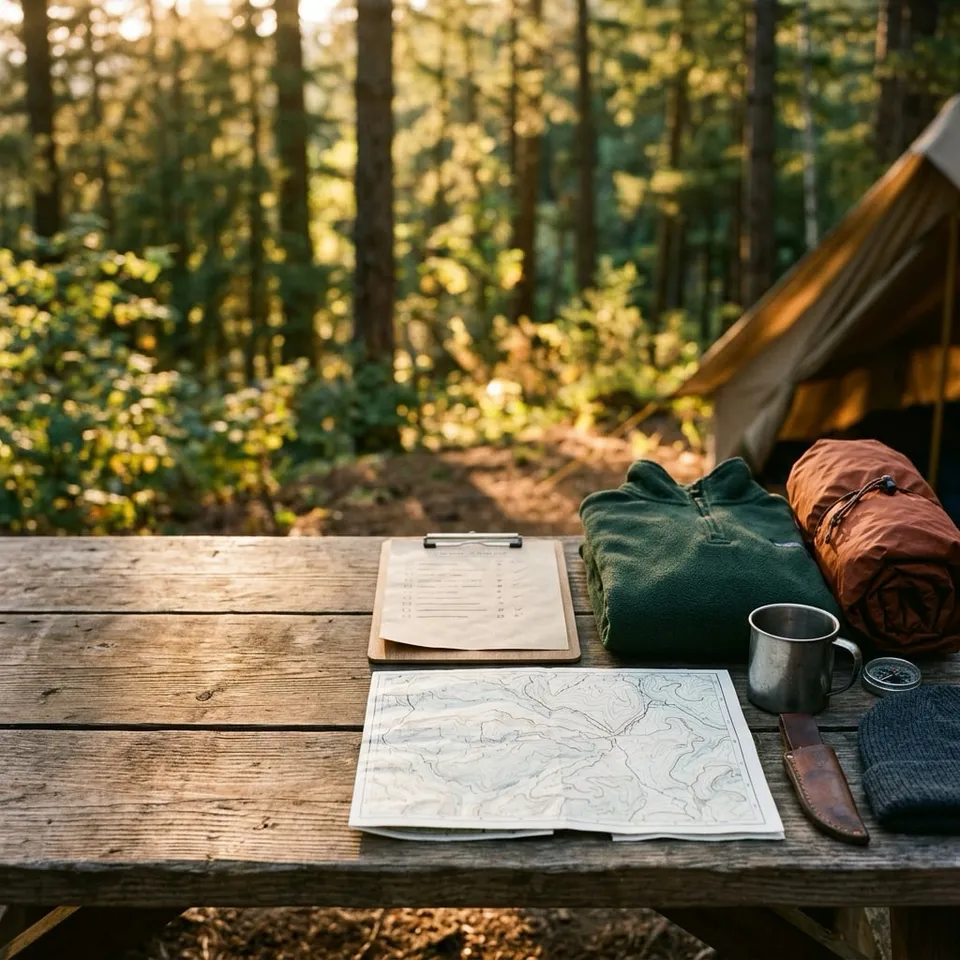
Complete camping and hiking checklists
A complete camping and hiking checklist organizes essential equipment by function to prevent omissions, manage pack weight, and ensure safety. Standard checklists group gear into shelter, sleep systems, camp kitchen, hydration, clothing layers, navigation, and emergency supplies. Aligning your list with trip duration, local climate, and the Ten Essentials ensures self-reliance across day hikes, multi-night backpacking treks, and established campground setups.
On this page
Organizing outdoor gear by trip discipline
Structured preparation separates a successful wilderness excursion from an uncomfortable or dangerous retreat. Our comprehensive trip-planning checklists categorize field equipment according to trip distance, logistics, and overnight shelter demands. Whether preparing a fast morning ascent or outfitting a multi-day backcountry expedition, starting from a dedicated checklist prevents leaving vital survival gear on the workbench.
Outdoor recreation divides into three core disciplines, each with distinct gear priorities and weight thresholds:
- Day hiking: Focused on self-containment inside a 15 to 30-liter pack, balancing trail speed with emergency survival coverage. Review our dedicated day hike checklist to inspect the Ten Essentials before stepping onto local paths or national park trails.
- Backpacking: Centered on self-sufficiency across multiple days away from trailheads. Every item must be carried on your back, requiring careful balance between durability, pack volume, and base weight. Consult our detailed backpacking checklist for shelter systems, bear-safe food storage, and backcountry water purification.
- Car camping: Focused on camp living comfort, gourmet outdoor meal preparation, and spacious campsite organization at established drive-in campgrounds. Explore our complete camping checklist for multi-room tents, heavy sleeping cots, and two-burner propane stoves.
Each discipline requires different trade-offs between packed weight, structural durability, and creature comforts.
The Ten Essentials as the foundation of wilderness safety
Every outdoor outing, regardless of distance or familiar terrain, must incorporate the Ten Essentials established by outdoor safety organizations and supported by the National Park Service Ten Essentials framework. The system functions as risk mitigation against sudden weather shifts, route navigation errors, unexpected injuries, and unplanned nights outdoors.
The Ten Essentials organize into functional safety systems:
- Navigation: A detailed topographic paper map of the area, a magnetic declination-adjustable compass, and a satellite messenger or offline GPS receiver. Do not rely solely on cellular telephone coverage in remote drainages.
- Headlamp and illumination: An LED headlamp with fully charged batteries and spare power cells to maintain safe travel if a trip extends beyond sunset.
- Sun protection: Broad-spectrum sunscreen, polarized UV sunglasses, and wide-brimmed headwear to prevent thermal exhaustion and ocular damage.
- First aid supplies: Medical bandages, antiseptic ointments, blister treatment pads, trauma shears, and personal emergency medications.
- Knife and repair kit: A lockback blade or multi-tool paired with repair tape, zip ties, and cordage to resolve equipment failures in the field.
- Fire starter: Waterproof storm matches, a reliable piezo lighter, and commercial tinder cubes capable of lighting damp wood in wet weather.
- Emergency shelter: A reflective space blanket, ultralight emergency bivy, or compact silicone-nylon tarp to ward off wind and hypothermia during forced trail bivouacs.
- Extra food: Calorie-dense, non-perishable rations sufficient to supply an additional twenty-four hours of basic energy demands.
- Extra water: Adequate hydration vessels alongside an active hollow-fiber filter or chemical purification tablets to process raw water sources safely.
- Extra clothing insulation: Synthetic or merino wool insulating garments and an impermeable waterproof rain shell to manage ambient temperature drops.
Carrying these tools ensures that minor backcountry complications do not escalate into search-and-rescue operations.
Environmental stewardship with Leave No Trace principles
Outdoor recreation carries an ecological footprint that packing discipline directly mitigates. Integrating the Leave No Trace Seven Principles into your packing workflow protects fragile ecosystems and maintains wilderness quality for future travelers.
Field preparation aligns with sustainable practices in several key operational areas:
- Pre-trip packaging: Remove commercial cardboard boxes and plastic wrap at home, repacking food rations into reusable silicone bags to minimize pack weight and prevent trailside litter.
- Waste management equipment: Pack a dedicated trowel to dig catholes (the National Park Service gives 6 to 8 inches deep and at least 200 feet from water, camp and trails), alongside sealable bags to pack out all used sanitary paper.
- Campfire management: Carry a clean-burning canister or liquid fuel stove rather than depending on open campfires, preserving standing deadwood for local wildlife habitat and eliminating wildfire hazards.
- Surface protection: Select compact freestanding tents with durable nylon footprints that establish camp on durable rock, mineral soil, or established gravel pads without trampling sensitive alpine flora.
Tailoring pack systems to seasonal and regional demands
A checklist serves as an adaptable framework rather than an unyielding mandate. Environmental variables dictate adjustments to clothing weights, water capacities, and thermal insulation ratings:
- Arid desert routes: Elevate hydration carrying capacity to four or six liters per day, emphasize wide sun hoods and mineral sunblocks, and carry fine-gauge tweezers for cactus spine removal.
- Alpine mountain ascents: Pack insulated gloves, thermal wool beanies, and hardshell outerwear even during midsummer months, as elevation drops ambient temperature roughly three to five degrees Fahrenheit per one thousand feet of elevation gained.
- Wet coastal forests: Emphasize waterproof dry sacks inside your pack liner, pack seam-sealed silicone tarps for cooking shelters, and choose synthetic insulation that retains loft in persistent coastal humidity.
To customize your gear selections based on seasonal temperatures, terrain type, and group size, generate a personalized inventory using our interactive packing list generator. For insight into how our team evaluates gear specifications and materials without running an in-house testing facility, read our editorial disclosure on how we choose gear.
Trip checklists
- Backpacking checklist for multi-night wilderness tripsPrepare for multi-night wilderness trails with our complete backpacking checklist. Understand base weight, the Big Three, and trail safety gear.
- Backpacking food list and trail meal planning guidePlan calorie-dense trail meals with our backpacking food list. Master daily calorie targets, no-cook options, bear canister rules, and day-by-day packing.
- Camping with kids checklist for family tripsPlan a safe, organized family trip with our camping with kids checklist. Covers shelter, layered clothing, kid-friendly food, camp safety, and games.
- Car camping checklist for campground tripsPlan your next campground trip with our complete car camping checklist. Detailed gear lists for camp kitchen, shelter, sleep systems, and safety.
- Car camping checklist for campground tripsPack every essential for your next campground trip with our complete car camping checklist. Detailed gear for shelter, sleep, kitchen, water, and safety.
- Custom outdoor packing list generatorGenerate an outdoor gear packing list by trip type, nights and season, with typical weights where a maker states one and a printable checklist.
- Day hike checklist and Ten Essentials guidePack safely for every trail with our complete day hike checklist. Covers the Ten Essentials, weather layers, hydration, and trail safety equipment.
- Hiking first aid kit checklist by trip lengthBuild a reliable trail medical kit with our hiking first aid kit checklist. Covers supplies by trip length, blister care, and wilderness training.
- Hiking with dogs checklist for trail safetyPrepare for the trail with our hiking with dogs checklist. Covers leash rules, hydration, paw care, waste disposal, heat safety, and canine first aid.
- Leave No Trace principles: a plain-language outdoor ethics guideUnderstand the seven Leave No Trace principles with practical outdoor examples for campfire safety, human waste disposal and safe wildlife distances.
- Ten Essentials hiking checklist and safety guidePrepare for every trail emergency with the Ten Essentials hiking checklist. Learn how each system works for day hikes, overnights, and ultralight packing.
- Winter hiking checklist for cold-weather trailsPack safely for snow and freezing temperatures with our winter hiking checklist. Covers the Ten Essentials, traction, layering, and hypothermia signs.
Frequently asked questions
What are the core categories of an outdoor gear checklist?
Every outdoor packing list divides gear into functional systems: shelter, sleep system, hydration, camp kitchen, clothing layers, navigation, first aid, lighting, tools, and personal hygiene. Grouping items by category prevents overlooking critical safety components like water treatment or headlamps. It also helps you inspect and maintain each kit between outings, ensuring fuel canisters remain full, batteries hold charge, and medical supplies stay replenished.
How do day hike, backpacking, and car camping lists differ?
Day hike checklists prioritize lightweight safety gear, rapid hydration, weather-protective shells, and the Ten Essentials inside a small pack. Backpacking checklists add self-contained sleeping gear, lightweight backcountry cookware, water filtration, and several days of calorie-dense food where every ounce matters. Car camping lists remove weight restrictions entirely, favoring heavy multi-room family tents, thick cots or air mattresses, double-burner propane stoves, and large ice coolers for camp comfort.
What is the difference between base weight and total pack weight?
Base weight measures the total weight of your backpack and all non-consumable equipment inside it, such as your shelter, sleeping bag, stove, extra clothing, and first-aid kit. Total pack weight combines your base weight with consumables that decrease during travel, specifically drinking water, food rations, and stove fuel. Tracking base weight provides an objective standard to optimize gear without compromising trip-specific nutritional and hydration needs.
Why should you avoid cotton clothing when hiking or camping?
Cotton fibers absorb moisture rapidly, holding up to twenty-seven times their weight in water while drying very slowly. When sweat or rain saturates cotton garments, the fabric loses all insulating air pockets and clings to skin, accelerating conductive heat loss. In cool or windy wilderness conditions, wet cotton dramatically increases hypothermia risk. Hikers should choose synthetic polyester, nylon, or merino wool fabrics that insulate when damp.
How much water should you pack for outdoor activities?
A reliable baseline is one-half liter of water per person per hour of moderate hiking in temperate conditions. High heat, steep trail elevation gains, and dry desert environments can double that requirement to one full liter per hour. For overnight trips, campers must also budget extra water for evening meal rehydration, morning coffee, and camp clean-up, or ensure reliable access to a verified water source and filtration device.
How does seasonal weather alter outdoor packing requirements?
Shoulder season and winter trips require higher R-value sleeping pads, sub-freezing rated sleeping bags, windproof outer shells, thermal gloves, and extra fuel to melt snow or warm meals. Summer outings shift the priority to sun protection, breathable insect netting, electrolyte replenishment, and lightweight rain protection. Regardless of season, mountain weather changes rapidly, making emergency warmth and waterproof layers mandatory year-round.