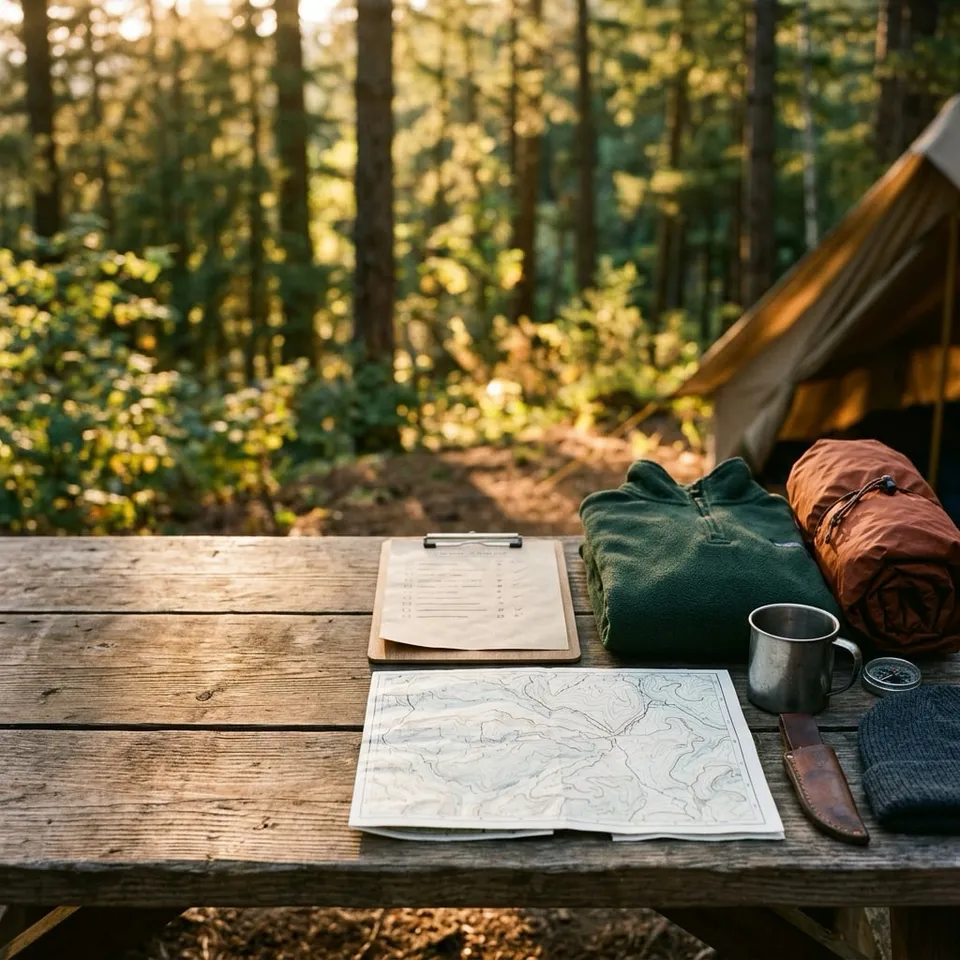
Backpacking checklist for multi-night wilderness trips
A multi-night backpacking checklist organizes backcountry equipment into the Big Three shelter, sleep system, and pack alongside camp cooking, water purification, clothing layers, and safety essentials. Understanding base weight the weight of all packed gear excluding food, water, and fuel helps hikers reduce pack strain while preserving wilderness safety, proper nutrition, and Leave No Trace environmental ethics on remote trails.
On this page
Understanding base weight and pack weight categories
Preparing for multi-night wilderness travel requires careful calculation of every ounce placed inside your pack. Using our master camping and hiking checklists provides a structured system to prevent overpacking while ensuring critical survival items are never omitted. Unlike drive-in campground visits, every piece of backcountry gear must be transported on your shoulders over steep passes, rocky scree, and river crossings.
Backcountry weight calculations divide into two distinct categories:
- Base weight: The total weight of your backpack and all non-consumable equipment carried inside or strapped to it. This includes your tent, sleeping bag, sleeping pad, stove, cookware, spare clothing, first-aid supplies, and navigation tools. It excludes items worn on your body (boots, trekking poles, hiking shirt) and all consumable resources.
- Consumables: The items you consume or burn during travel: drinking water (2.2 pounds per liter), food rations (roughly 1.5 to 2.5 pounds per person per day), and canister fuel.
- Total pack weight: Base weight combined with consumables at the trailhead.
Backpackers generally classify setups by base weight thresholds:
- Ultralight (under 10 lbs / 4.5 kg): Employs minimalist frameless packs, non-freestanding trekking-pole shelters, and high-loft down quilts. Highly efficient for experienced hikers on maintained trails. Read our detailed analysis of ultralight tents to understand the materials behind sub-two-pound shelters.
- Lightweight (10 to 20 lbs / 4.5 to 9.0 kg): The most practical target for most multi-night backpackers. Uses lightweight internal-frame packs and double-wall freestanding tents without sacrificing weather protection or sleeping comfort.
- Traditional (over 20 lbs / 9.0 kg): Characterized by heavy-duty nylon packs, thick sleeping pads, and extensive camp comforts. Total pack weight with food and water frequently exceeds thirty-five to forty-five pounds.
A sensible guideline is that total pack weight should never exceed twenty to twenty-five percent of your total body weight. Keeping your base weight under eighteen pounds ensures your pack remains manageable even when loaded with five days of food and three liters of water.
Change Gear earns a commission when you buy through some links on this page, at no cost to you. It never decides what we recommend.
The Big Three: backpack, shelter, and sleep system
The Big Three equipment categories account for more than half of your base weight. Focusing weight-reduction efforts on these three systems provides the greatest practical benefits.
- Internal-frame backpacking pack (30 to 75 oz / 1.9 to 4.7 lbs / 0.85 to 2.1 kg): Volume ranging from 45 to 65 liters with an adjustable harness, load lifters, and padded hip belt to transfer eighty percent of pack weight onto your iliac crest.
- Backpack rain cover or waterproof pack liner (2 to 5 oz / 57 to 142 g): A silicone-coated pack cover or internal heavy-duty contractor trash bag to keep down insulation dry during torrential downpours.
- Two-person three-season backpacking tent (32 to 56 oz / 2.0 to 3.5 lbs / 0.9 to 1.6 kg): Freestanding or semi-freestanding double-wall tent with aluminum poles, silicone-treated nylon or polyester rainfly, and taped bathtub floor.
- Ultralight tent stakes and guylines (3 to 6 oz / 85 to 170 g per set): Y-beam or needle stakes with reflective cord tensioners to secure shelters against high mountain winds.
- Backpacking sleeping bag or quilt (19 to 45 oz / 1.2 to 2.8 lbs / 0.54 to 1.28 kg): 800-fill down or continuous-filament synthetic insulation rated between 15 and 30 degrees Fahrenheit with draft collars and an insulated footbox.
- Insulated backpacking sleeping pad (12 to 18 oz / 0.75 to 1.1 lbs / 340 to 510 g): Inflatable air mattress or closed-cell foam pad providing an ASTM standard R-value of 3.0 or higher to block conductive heat loss to frozen soil.
- Ultralight camp pillow or stuff sack fleece (2 to 4 oz / 57 to 113 g): Inflatable TPU pillow or clothes stuffed into a soft storage sack.
Backcountry kitchen, water filtration, and food storage
Cooking and hydrating in the backcountry requires dependable, compact tools. Open campfires are prohibited in many alpine zones, making a reliable stove essential.
- Canister backpacking stove (2.6 to 5.0 oz / 73 to 142 g): Thread-on isobutane-propane burner with precision flame control and wind baffles.
- Isobutane-propane fuel canister (7 to 13 oz full / 198 to 369 g): 100g or 230g fuel mix container providing enough gas for five to ten days of boiling water.
- Titanium or anodized aluminum cook pot with lid (3.0 to 7.0 oz / 85 to 198 g): 600ml to 900ml capacity sized to nest a fuel canister and stove burner inside.
- Long-handled titanium or composite spoon (0.4 to 0.7 oz / 11 to 20 g): Reaches into deep dehydrated meal pouches without covering knuckles in sauce.
- Hollow-fiber squeeze water filter (2.3 to 4.0 oz / 65 to 113 g): 0.1-micron absolute hollow-fiber filtration membrane (such as the Sawyer Squeeze, which the maker states removes 99.99999% of bacteria and 99.9999% of protozoa; as a filter rather than a purifier, it does not remove viruses).
- Collapsible dirty water reservoir and clean drinking bottles (3 to 6 oz / 85 to 170 g total): One wide-mouth flexible reservoir for dirty water collection and two one-liter rigid plastic trail bottles.
- Backup chemical water purification tablets (0.5 to 1.0 oz / 14 to 28 g): Chlorine dioxide tablets for neutralizing waterborne viruses or backing up frozen hollow-fiber filters.
- Bear-resistant food canister or certified Kevlar bear bag (30 to 44 oz / 1.9 to 2.75 lbs / 0.85 to 1.25 kg): Hard-sided polycarbonate container storing all food, scented toiletries, and garbage away from camp.
- Fifty feet of reflective utility cord and carabiner (2 to 4 oz / 57 to 113 g): Used for hanging food in areas where tree hangs are permitted by wilderness regulations.
Technical clothing layers and trail footwear
Layering allows backpackers to regulate body temperature across changing elevations and weather conditions. Avoid cotton entirely, which traps perspiration and induces rapid heat loss.
- Synthetic or merino wool base layer tops (4 to 7 oz / 113 to 198 g): Wicks moisture away from your torso during strenuous climbing.
- Quick-dry nylon trail pants or running shorts (6 to 12 oz / 170 to 340 g): Breathable, abrasion-resistant lower layers with zippered security pockets.
- Active fleece mid-layer or grid pullover (8 to 14 oz / 227 to 397 g): Breathable thermal insulation for cold morning miles on the trail.
- Ultralight hooded down or synthetic jacket (8 to 16 oz / 227 to 454 g): Packable high-loft thermal jacket for stationary warmth in camp.
- Waterproof breathable rain jacket and pants (12 to 22 oz / 340 to 624 g total): 2.5-layer or 3-layer seam-taped membrane with pit zips to vent heat during ascents.
- Merino wool hiking socks (2 to 3 pairs / 4 to 8 oz / 113 to 227 g total): High-density merino wool socks for walking, plus one dry pair reserved strictly for sleeping. Discover recommended cushioning and heights in our guide to the best hiking socks.
- Trail running shoes or hiking boots: Lightweight, supportive trail footwear matched to terrain. For wider toe boxes, review our guide to the best hiking boots for wide feet.
- Lightweight camp shoes or sandals (6 to 14 oz / 170 to 397 g): Allows trail footwear to dry while airing out feet around camp.
- Warm beanie and sun protection hat (3 to 5 oz / 85 to 142 g total): Retains head heat when temperatures plunge at high elevation.
Navigation, safety, and the Ten Essentials
Remote multi-night routes require complete self-reliance. Always carry the complete safety kit recommended by the National Park Service Ten Essentials:
- Topographic paper map and magnetic compass (2 to 4 oz / 57 to 113 g): 7.5-minute USGS quadrangle or regional trail map sealed in a waterproof case, paired with a sighting compass.
- Satellite two-way communicator or personal locator beacon (3.5 to 7.0 oz / 99 to 198 g): Sends emergency SOS distress signals and off-grid check-in messages via satellite networks. See our Garmin inReach Mini 2 review for how 10-minute vs. 30-minute tracking intervals and tree canopy affect multi-day battery life.
- LED headlamp with spare lithium batteries (2.5 to 3.5 oz / 71 to 99 g): 200 to 400 lumen output with a red-light mode to preserve night vision.
- Wilderness first aid kit with blister care (4 to 8 oz / 113 to 227 g): Moleskin, hydrocolloid bandages, medical tape, sterile gauze, trauma shears, ibuprofen, and personal prescription medications.
- Backcountry knife or multi-tool (1 to 5 oz / 28 to 142 g): Small locking knife blade with scissors, tweezers, and a small flathead screwdriver.
- Waterproof matches, lighter, and tinder cubes (1 to 2 oz / 28 to 57 g): Stored inside a watertight plastic container for emergency warmth.
- Ultralight emergency bivy or reflective space blanket (3 to 4 oz / 85 to 113 g): Emergency thermal shelter if separated from your primary camp.
- Polarized sunglasses and broad-spectrum sunscreen (2 to 4 oz / 57 to 113 g): Essential protection against glare and UV radiation at high alpine altitudes.
Backcountry sanitation and Leave No Trace ethics
Preserving pristine wilderness demands careful adherence to the Leave No Trace Seven Principles:
- Ultralight backcountry trowel (0.6 to 2.0 oz / 17 to 57 g): Digs catholes six to eight inches deep, located at least two hundred feet (roughly seventy paces) from any water source, trail, or camp.
- Toilet paper and sealable waste bags (2 to 4 oz / 57 to 113 g): Pack out all used toilet paper and feminine hygiene products in an opaque, odor-proof zip-top bag. Never bury wet wipes.
- Biodegradable soap and hand sanitizer (2 to 4 oz / 57 to 113 g): Wash hands thoroughly after sanitation and before handling food supplies.
- Small pack towel and bandana (1 to 2 oz / 28 to 57 g): Quick-drying microfiber for personal drying and wiping condensation off tent walls.
- Camp dish cleanup: Strain all dishwater through a mesh bandana to capture solid food particles, dispose of solids in your bear canister trash bag, and broadcast clean dishwater two hundred feet from streams and lakes.
For shorter trail adventures that do not require an overnight camp setup, review our streamlined day hike checklist. To calculate personalized pack weights and food quantities based on your specific trip duration, use our packing list generator.
Frequently asked questions
What is base weight in backpacking and why does it matter?
Base weight is the combined weight of your backpack and all non-consumable gear inside it, excluding variable items like food, drinking water, and stove fuel. Because consumables diminish as you hike, base weight provides an objective, consistent baseline for comparing gear choices. Keeping your base weight between twelve and eighteen pounds protects joints, minimizes fatigue on steep climbs, and leaves load capacity for necessary safety gear.
What are the Big Three in backpacking?
The Big Three refers to the three heaviest gear items in your pack: your backpack, your shelter system, and your sleep system, which includes your sleeping bag and pad. In traditional setups, these items can exceed fifteen pounds combined. Modern lightweight materials allow backpackers to reduce the Big Three to six to nine pounds total, yielding the largest weight savings available without sacrificing warmth or shelter.
How much food should you pack per day on a backpacking trip?
Plan for 1.5 to 2.5 pounds of food, or roughly 2,500 to 4,500 calories per person per day, depending on trail elevation gains, pack weight, and ambient temperatures. Prioritize calorie-dense items offering over one hundred calories per ounce, such as nuts, nut butters, dehydrated meals, chocolate, and olive oil, while packing an extra half-day of emergency rations.
How much water capacity do you need for multi-night backpacking?
Backpackers typically carry two to three liters of water capacity, split between lightweight collapsible bottles and a main drinking reservoir. In arid regions or along dry ridgelines where water sources are ten or more miles apart, increase total carrying capacity to four to six liters, and verify flowing water points with park rangers before heading into the backcountry.
What is the best method for storing food away from bears and wildlife?
Hard-sided bear canisters are required in some national parks and wilderness areas, while other parks allow park-installed metal food lockers, bear-resistant fabric sacks, or counterbalanced tree hangs placed at least twelve feet high and six feet out from a branch. Always check the specific park's food-storage regulations before your trip, and store all food, trash, and scented toiletries away from camp.
How can you reduce pack weight without buying expensive new gear?
You can cut significant weight without buying new equipment by eliminating redundant comfort items, leaving heavy cotton clothing behind, and trimming excess packaging from foods at home. Repack bulk toiletries into half-ounce dropper bottles, carry only the exact amount of repair tape and cordage needed, and plan water replenishment around verified trail streams instead of over-carrying excess fluid weight.