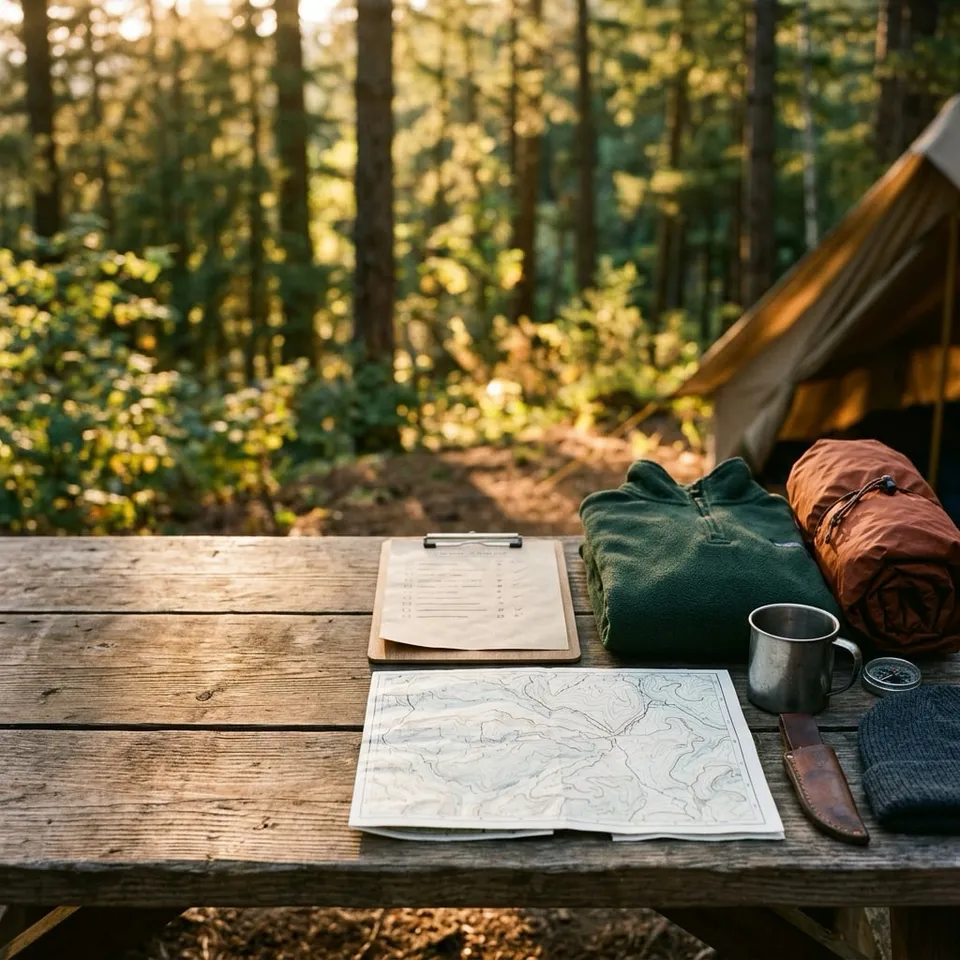
Ten Essentials hiking checklist and safety guide
The Ten Essentials are a collection of safety systems designed to prevent emergencies and ensure wilderness survival during unexpected trail delays or overnights. Established by The Mountaineers and endorsed by the National Park Service, the systems comprise navigation, headlamp illumination, sun protection, first-aid supplies, knife and tool repair, fire starters, emergency shelter, extra food, extra water, and insulating clothing layers. Carrying these items provides basic life-support capability on every hike.
On this page
The origins and evolution of the Ten Essentials
Every safe wilderness excursion starts with systematic preparation. Whether embarking on a two-hour woodland loop or a multi-day high-alpine traverse, unexpected delays can turn routine outings into survival situations. Our comprehensive trip-planning checklists prioritize backcountry self-reliance, ensuring outdoor travelers remain equipped to navigate changing trail conditions, unexpected injuries, or sudden shifts in mountain weather.
The concept of the Ten Essentials originated in the 1930s with The Mountaineers, a Seattle-based organization of climbers and outdoor adventurers. The group created the list to answer two fundamental safety questions: First, can you respond effectively to an accident or emergency? Second, can you safely spend an unplanned night outdoors if forced to do so?
For decades, the list prescribed ten individual items, including a map, compass, flashlight, and matches. The Mountaineers later modernized the framework into a systems approach, which the National Park Service describes as ten categories, or systems (it cites the 8th edition, 2010, of Mountaineering: The Freedom of the Hills). Rather than mandating a specific brand or narrow tool, each system represents a functional wilderness survival capability. This systems framework was subsequently adopted by the National Park Service Ten Essentials program to encourage trail safety nationwide.
Carrying the Ten Essentials pairs directly with the Leave No Trace Seven Principles, which emphasize advance planning, minimal impact, and personal responsibility. When hikers carry the gear needed to care for themselves, they avoid compromising fragile habitats or creating unnecessary strain on regional search and rescue personnel.
Change Gear earns a commission when you buy through some links on this page, at no cost to you. It never decides what we recommend.
The Ten Essentials systems checklist
Modern outdoor gear makes assembling the Ten Essentials easier and lighter than in previous decades. Below is the complete itemized checklist across all ten safety systems, including typical manufacturer weight specifications for lightweight backpacking and hiking gear.
1. Navigation system
Reliable navigation allows you to confirm your location, trace your route, and reorient if you lose the trail. Digital navigation tools should always be paired with non-electronic mechanical backups.
- Topographic paper map (1.0 to 2.5 oz / 28 to 71 g): A waterproof, tear-resistant 1:24,000 scale topographic map of the specific recreation area. Paper maps never suffer dead batteries or software crashes.
- Magnetic baseplate compass (1.1 to 1.8 oz / 31 to 51 g): An oil-damped liquid-filled compass featuring a rotating bezel, sighting mirror, and adjustable declination scale (such as standard models from Suunto or Silva).
- Satellite communicator or GPS receiver (3.5 to 7.0 oz / 99 to 198 g): A dedicated two-way satellite messenger (such as a Garmin inReach or ACR Bivy Stick) capable of sharing track points and transmitting an SOS distress signal outside cellular network range. For a deep dive into standalone SOS, battery life across tracking intervals, and TracBack breadcrumb routing, read our Garmin inReach Mini 2 review. Deciding between a standalone display unit and a screenless smartphone-first satellite modem? Read our Garmin inReach Mini 2 vs ZOLEO comparison.
- Smartphone with pre-downloaded offline maps: Digital topographic mapping apps (like Gaia GPS or CalTopo) with regional maps saved for offline use, stored in a protective waterproof case.
- Backup power bank and charging cable (2.5 to 6.5 oz / 71 to 184 g): A compact 5,000 to 10,000 mAh external lithium battery pack to recharge your phone or headlamp during extended trail delays.
2. Illumination system
Darkness falls quickly in mountain canyons, and travel times often exceed initial estimates. Hands-free illumination is mandatory for safe route finding after twilight.
- LED headlamp (1.6 to 3.2 oz / 45 to 91 g): A high-output headlamp providing 200 to 450 lumens of output with adjustable brightness settings, a red-night-vision mode, and an IPX4 or higher water-resistance rating (such as models from Petzl, Black Diamond, or Nitecore).
- Spare batteries or USB charging cord (0.8 to 1.5 oz / 23 to 43 g): Fresh AAA lithium batteries or a short USB charging cable dedicated to keeping your headlamp functional.
- Headlamp lockout feature: Ensure your headlamp includes a mechanical or electronic lockout switch so it cannot accidentally turn on and deplete its battery inside your pack.
3. Sun protection system
High-altitude ultraviolet radiation intensifies by roughly four percent for every 1,000 feet of elevation gain. Snowfields and alpine granite reflect sunlight upward, multiplying exposure.
- Polarized sunglasses (1.0 to 1.5 oz / 28 to 43 g): 100% UVA and UVB-blocking sunglasses with wraparound side coverage to prevent snow blindness, corneal damage, and eye fatigue.
- Broad-spectrum sunscreen (1.2 to 2.5 oz / 34 to 71 g): SPF 30 to SPF 50 mineral or chemical sunscreen packaged in a leakproof travel tube, formulated for active sweat and water resistance.
- Sun protection lip balm (0.15 to 0.3 oz / 4 to 8 g): Zinc oxide or chemical SPF 30 lip balm to protect delicate lips against drying wind and UV blistering.
- Sun hat or lightweight cap (1.5 to 3.0 oz / 43 to 85 g): A wide-brim hat or technical running cap that shields your face, ears, and neck from direct solar exposure.
4. First-aid supplies system
A wilderness first-aid kit addresses common trail hazards, stabilizes soft tissue injuries, and manages personal prescription regimens.
- Pre-assembled or custom first-aid kit (3.5 to 8.0 oz / 99 to 227 g): A compact waterproof pouch containing sterile gauze pads, adhesive bandages of various sizes, medical tape, antiseptic wipes, antibiotic ointment, and butterfly closures.
- Blister prevention and treatment (0.5 to 1.0 oz / 14 to 28 g): Hydrocolloid blister bandages, pre-cut kinesiology tape, and moleskin pads to stop hot spots before they tear open.
- Medications and pain management (0.5 to 1.0 oz / 14 to 28 g): Ibuprofen for muscular inflammation, acetaminophen, antihistamines (diphenhydramine) for allergic reactions, and loperamide for gastrointestinal distress.
- Splinter tweezers and trauma shears (0.5 to 1.5 oz / 14 to 42 g): Fine-point stainless steel tweezers for removing ticks and cactus spines, plus compact medical shears for cutting tape and clothing.
- Nitrile medical gloves (0.4 oz / 11 g): Two pairs of powder-free medical gloves to protect against bloodborne pathogens when rendering aid to others.
5. Knife and gear repair system
Knives and repair tools solve mechanical failures on the trail, from repairing broken boot soles and torn pack straps to cutting emergency cordage.
- Folding pocket knife or multi-tool (0.8 to 5.0 oz / 21 to 142 g): Either a compact non-locking pocket knife with a small blade, scissors, nail file with a 2.5 mm screwdriver tip, tweezers, and toothpick (such as the 0.8 oz / 21 g Victorinox Swiss Army Classic SD) or a full multi-tool equipped with a locking blade, pliers, wire cutters, and bit driver (such as a Leatherman Skeletool).
- Heavy-duty duct tape or Tenacious Tape (0.5 to 1.0 oz / 14 to 28 g): Two to three yards of duct tape wrapped around a trekking pole or lighter, ideal for sealing torn rain jackets or securing detached boot treads.
- Ripstop nylon patch kit and sewing needle (0.3 to 0.6 oz / 8 to 17 g): Self-adhesive fabric repair tape and heavy-duty nylon thread for mending torn tent fabric, sleeping pads, or clothing.
- Zip ties and spare buckles (0.3 to 0.5 oz / 8 to 14 g): Several nylon cable ties and a replacement pack sternum buckle for rapid field repairs.
6. Fire starter system
An emergency fire provides lifesaving warmth, dries soaked clothing, signals search aircraft, and boosts morale during a wilderness crisis.
- Waterproof matches in a sealed case (0.6 to 1.0 oz / 17 to 28 g): Windproof and stormproof matches that burn even after submersion in water, stored in an O-ring sealed watertight cylinder.
- Compact butane lighter (0.4 to 0.8 oz / 11 to 23 g): A reliable mini disposable lighter kept warm in an interior clothing pocket during freezing weather.
- Emergency tinder (0.5 to 1.0 oz / 14 to 28 g): Paraffin-soaked cotton balls, commercial fire cubes, or wet-fire tinder tabs capable of catching spark in driving rain or snow.
7. Emergency shelter system
If injured or trapped by severe storms, an emergency shelter creates a microclimate that prevents convective wind chill and radiative hypothermia.
- Ultralight emergency bivy sack (3.8 to 4.2 oz / 108 to 119 g): A heat-reflective polyethylene bivouac bag (such as the SOL Emergency Bivy) that reflects up to ninety percent of radiated body heat while sealing out exterior rain and wind.
- Space blanket (2.5 to 3.0 oz / 71 to 85 g): A durable aluminized Mylar emergency blanket used as an emergency ground sheet, overhead tarp, or body wrap.
- Heavy-duty contractor trash bag (1.5 to 2.5 oz / 43 to 71 g): A 55-gallon, 3-mil thick contractor clean-up bag that functions as a makeshift poncho, pack liner, or windbreak.
8. Extra food system
Carrying additional food beyond your planned consumption provides caloric energy to generate body heat and sustain stamina if your return is delayed by 12 to 24 hours.
- Calorie-dense emergency rations (4.0 to 8.0 oz / 113 to 227 g): Approximately 500 to 1,000 calories of non-perishable food that requires zero preparation or cooking.
- High-energy trail snacks: Dense provisions including raw mixed nuts, seed mixes, nut butter squeeze pouches, energy bars, and beef or turkey jerky. Choose foods offering at least 120 calories per ounce.
9. Extra water and filtration system
Dehydration accelerates physical exhaustion, impairs judgment, and increases susceptibility to altitude sickness and hypothermia. Always carry water plus a reliable treatment method.
- Water purification filter or chemical tablets (0.5 to 3.5 oz / 14 to 99 g): A compact hollow-fiber membrane squeeze filter (such as the Sawyer Squeeze or Katadyn BeFree) or chlorine dioxide water purification tablets to treat natural water sources.
- Durable water containers (2.5 to 6.0 oz empty / 71 to 170 g): Two one-liter polyethylene wide-mouth trail bottles or a collapsible TPU water reservoir to transport adequate water between sources.
- Electrolyte replacement packets (0.5 to 1.0 oz / 14 to 28 g): Powdered electrolyte mixes to replace essential sodium, magnesium, and potassium lost through strenuous exertion.
10. Extra clothing insulation system
Mountain temperatures plummet rapidly when the sun sets or storm fronts roll in. The insulation system ensures you can stay warm without moving.
- Packable puffy jacket (7.0 to 13.0 oz / 198 to 369 g): A lightweight down or synthetic fill jacket that compresses small in your pack and delivers high thermal warmth when resting.
- Waterproof breathable rain shell (6.0 to 14.0 oz / 170 to 397 g): A fully seam-taped technical shell jacket that completely stops driving rain and blocking ridgeline wind gusts.
- Merino wool beanie and lightweight gloves (2.0 to 3.5 oz / 57 to 99 g total): A knit wool or fleece hat and wind-resistant liner gloves to protect extremities from rapid heat loss.
- Spare wool socks (2.0 to 3.0 oz / 57 to 85 g): A dry pair of merino wool hiking socks sealed inside a plastic bag to replace soaked trail socks at night.
Day hike versus overnight backpacking safety requirements
The Ten Essentials remain relevant on every outdoor outing, but their implementation changes dramatically between a four-hour afternoon hike and a multi-day wilderness backpacking expedition. Understanding how gear duties shift prevents carrying excessive dead weight while preserving safety margins.
What the essentials mean on a day hike
On a day excursion, your backpack carries minimal routine equipment. Consequently, the Ten Essentials serve as dedicated insurance against unexpected emergencies. For a comprehensive walkthrough of packing a daypack, consult our dedicated day hike checklist.
- Shelter: You do not carry a standard tent on an afternoon hike. Your shelter essential is an emergency bivy sack or aluminized reflective blanket that remains stowed at the bottom of your pack unless disaster strikes.
- Food and cooking: Day hikers rarely bring a camp stove. Extra nutrition consists of nutrient-dense energy bars, trail mix, and shelf-stable snacks requiring no boiling water.
- Clothing: You carry dedicated extra layers beyond your active hiking shirt and shorts. A compact down jacket and rain shell live in the pack even when starting under clear blue skies.
- Water: You carry carried water sufficient for the planned route, backed by a micro squeeze filter or purification tablets to replenish from streams if the hike takes hours longer than anticipated.
What the essentials mean on an overnight backpacking trip
When embarking on a backcountry overnight trip, your standard camping equipment automatically fulfills several of the Ten Essentials systems. Review our complete backpacking checklist to balance camp comfort with trail weight.
- Shelter: Your primary double-wall tent, ultralight tarp, or hammock setup satisfies the emergency shelter requirement. There is no need to pack a separate emergency space bivy because your primary backcountry shelter is already in your pack.
- Insulation: Your thermal sleeping bag or backpacking quilt, paired with an insulated sleeping pad, provides critical thermal protection. Extra clothing focuses on keeping dry sleep layers separate from damp daytime trekking apparel.
- Fire and nutrition: Your canister backpacking stove, titanium cook pot, and fuel canister function as your cooking and fire systems. Extra food simply means packing an extra full day of freeze-dried meals and snacks beyond your planned itinerary.
- Water: Overnight trips demand higher water storage capacities for cooking and rehydrating evening meals. Backpackers carry larger dirty-water squeeze bags and multi-liter bladders to process bulk water at camp.
| System | Day hike implementation | Overnight backpacking implementation |
|---|---|---|
| Navigation | Topo map, compass, phone app, offline track | Topo map, compass, GPS/satellite communicator, route notes |
| Illumination | Compact headlamp (200+ lumens) | High-output headlamp with spare battery or recharging bank |
| Sun protection | Pocket sunscreen, lip balm, sunglasses, sun hat | Full travel sunscreen tube, sunglasses, UPF sun hoodie |
| First aid | Ultralight day kit, blister care, tweezers | Comprehensive wilderness kit, splint material, medications |
| Knife and repair | Small pocket knife, 2 feet of duct tape | Multi-tool with pliers, repair patch kit, pole splint |
| Fire | Stormproof matches, mini lighter, tinder tabs | Camp stove, piezo igniter, backup stormproof matches |
| Shelter | Reflective emergency bivy sack (under 4 oz) | Full backpacking tent, tarp shelter, or bivy |
| Food | 500 to 1,000 emergency snack calories | Extra 24 hours of complete meals and calorie-dense snacks |
| Water | 2 liters carried water plus pocket filter | Squeeze filter, gravity bladder, 3 to 4 liters capacity |
| Clothing | Packable puffy jacket, rain shell, wool hat | Complete camp sleep layers, puffy jacket, rain shell, dry socks |
How to keep the Ten Essentials lightweight
Many hikers leave critical safety items at home because they fear carrying a heavy, cumbersome pack. However, modern outdoor materials and smart multi-purpose gear selection allow you to assemble the complete Ten Essentials safety suite at a combined weight under twenty-five ounces (roughly 1.5 pounds).
Focus on multi-purpose gear
Selecting items that perform multiple distinct functions reduces the total number of objects in your pack:
- Trekking pole repair wrap: Instead of carrying an entire roll of heavy duct tape, wrap three feet of heavy-duty duct tape around the upper shaft of your trekking poles. It is instantly accessible to patch a tent fly or tape a blistered heel without adding pack volume.
- Bandana or cotton buff: A clean bandana protects your neck from sunburn, serves as a pre-filter for turbid stream water before running it through your squeeze filter, functions as a pot holder, and acts as a triangular bandage or tourniquet in a medical emergency.
- Satellite communicator with built-in navigation: Modern satellite communicators integrate basic compass bearings, elevation profiles, and emergency SOS signaling into a single three-ounce electronic device.
Select ultralight emergency gear
Dedicated emergency gear does not need heavy-duty commercial durability because it is rarely deployed. Prioritize ultralight materials designed specifically for emergency protection:
- Micro headlamps: Replace heavy four-ounce multi-battery headlamps with an ultralight rechargeable lithium headlamp (such as the Nitecore NU25 MCT UL or NU25 MCT) weighing 1.66 to 1.76 ounces (47 to 50 grams) with headband.
- Heat-reflective polyethylene bivies: Standard space blankets tear easily in high winds, while heavy tarps weigh over a pound. A 3.8-ounce polyethylene emergency bivy sack offers windproof, waterproof shelter that withstands mountain gusts without tearing.
- Micro squeeze filters: A compact hollow-fiber membrane filter (such as the Sawyer Squeeze or Katadyn BeFree) weighs just two to three ounces empty and purifies hundreds of gallons of water, eliminating the need to haul heavy water reserves.
To calculate your exact base weight and customize an itemized packing inventory for your next outing, use our interactive packing list generator.
Backcountry safety ethics and emergency preparedness
Carrying the Ten Essentials is only the physical component of outdoor safety. True backcountry preparedness requires knowledge, route research, and responsible environmental ethics.
Master your gear before heading out
A map and compass are useless if you cannot orient a topographic sheet to true north or take a field bearing to an identifiable landmark. Similarly, learning how to operate a water filter or ignite emergency tinder in driving rain should happen at home or in a controlled environment, not during a mountain storm. Take time to inspect your gear seasonally: test headlamp batteries, replace expired medications, and check that sunscreen tubes have not leaked.
Leave a detailed travel itinerary
Before leaving cellular coverage, always provide a detailed trip plan to a dependable contact at home. Specify your trailhead location, planned route, vehicle description and license plate, expected return time, and a predetermined deadline when emergency authorities should be alerted. Search and rescue personnel rely on accurate travel plans to narrow their search corridor if an unexpected delay occurs.
Practice Leave No Trace principles
Being self-sufficient in the backcountry protects fragile wilderness ecosystems. Adhering to Leave No Trace ethics ensures our public lands remain pristine for future generations:
- Plan ahead and prepare: Familiarize yourself with local land management regulations, seasonal fire restrictions, and weather forecasts before departing.
- Dispose of waste properly: Pack out all trash, used bandages, food packaging, and hygiene products. Never bury trash in catholes or burn plastic wrappers in campfires.
- Respect wildlife: Keep food, garbage, and scented toiletries securely stored away from wild animals, maintaining safe viewing distances at all times.
- Be considerate of other visitors: Yield to uphill hikers, keep audio devices silenced, and use dim red-light settings on headlamps around other campers.
Frequently asked questions
Why are the Ten Essentials organized into systems rather than individual items?
The Mountaineers developed the Ten Essentials as ten categories, or systems, rather than a list of individual items; the National Park Service cites the 8th edition (2010) of Mountaineering: The Freedom of the Hills for details. Rather than prescribing single standalone items like a box of wooden matches, a system focuses on functional survival capability, such as fire. This allows hikers to choose between stormproof matches, butane lighters, or chemical tinder based on regional conditions, seasonal moisture, and personal packing strategies.
Do you need all Ten Essentials on an easy day hike?
Yes. Search and rescue personnel frequently assist day hikers who ventured onto familiar paths expecting a short outing but became stranded by a sprained ankle, unexpected navigation error, or sudden mountain storm. Even on a short route, carrying the Ten Essentials ensures you can signal for help, treat injuries, maintain core body temperature, and stay hydrated until assistance arrives or morning daylight returns.
How do the Ten Essentials differ between day hikes and overnight backpacking?
On a day hike, essentials serve primarily as emergency insurance: an ultralight heat-reflective bivy sack, compact headlamp, and a water filter carried alongside two liters of water. On an overnight backpacking trip, your baseline camp gear fulfills several essentials automatically. Your primary tent serves as shelter, your sleeping bag provides insulation, and your camp stove functions as part of your fire and nutrition systems.
Can a smartphone replace a physical map and magnetic compass?
Smartphones offer exceptional GPS mapping tools and offline topo applications, but they should never serve as your sole navigation device. Cold weather quickly drains lithium batteries, dropping a phone on granite can shatter its display, and rain can disable touchscreens. A physical topographic map and an oil-filled magnetic compass require no battery power, remain impervious to impact, and work in any weather conditions.
How can hikers keep the Ten Essentials lightweight in a small daypack?
Keeping the Ten Essentials light requires selecting multi-purpose items and modern ultralight materials. Use a rechargeable lithium headlamp weighing under two ounces, a mini baseplate compass, a micro multitool, a pocket squeeze water filter, and an emergency space bivy rather than a heavy shelter. By trimming redundant tools and packaging, your complete emergency safety kit can weigh under twenty-five ounces total.
What extra clothing is required for the insulation essential?
The insulation essential refers to clothing beyond what you wear on trail, specifically chosen to survive a wet, wind-chilled night in dropping temperatures. Standard items include a packable down or synthetic puffy jacket, a breathable waterproof rain jacket, a merino wool beanie, and lightweight gloves. Avoid cotton shirts or denim pants, which absorb perspiration and accelerate hypothermia when wet.