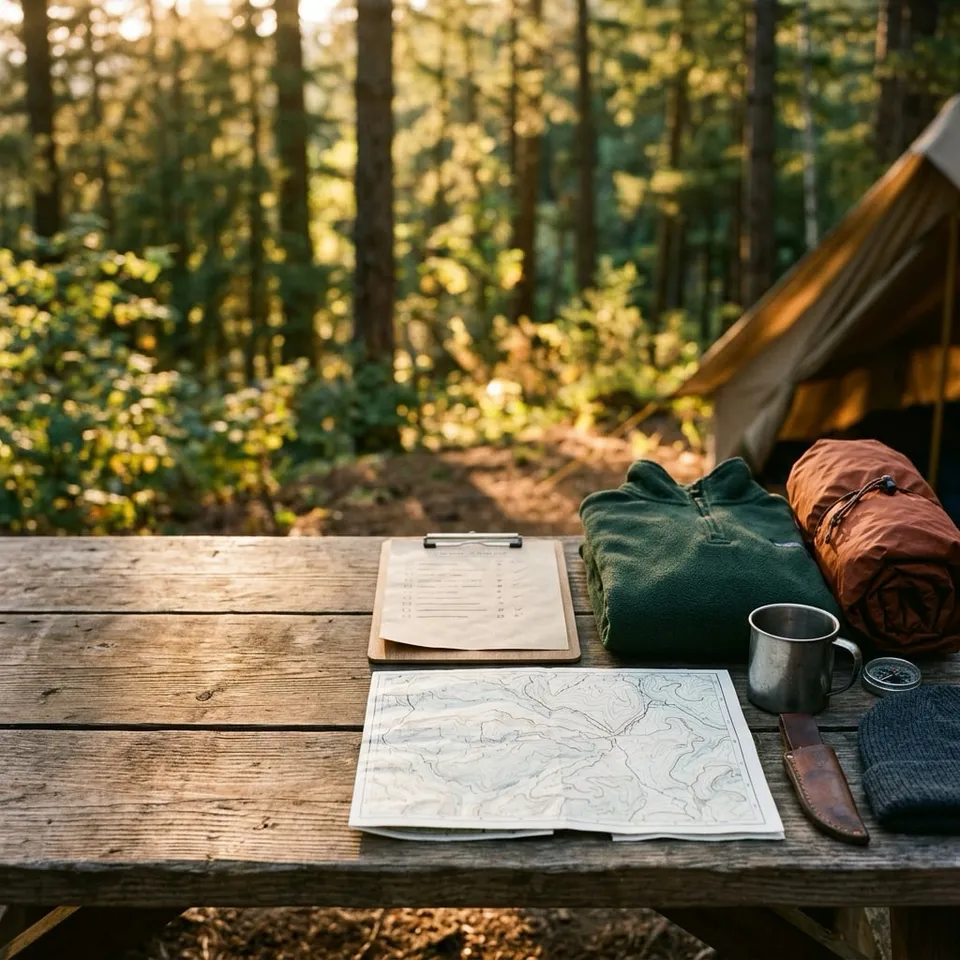
Backpacking food list and trail meal planning guide
A backpacking food list outlines the calorie-dense, lightweight provisions required to fuel multi-day wilderness treks without overloading your pack. Backpackers generally target 2,500 to 4,500 calories per day, translating to roughly 1.5 to 2.5 pounds of food daily. Successful trip planning combines dry or dehydrated breakfast, lunch, and dinner options with high-fat snacks, reliable food storage canisters to protect wildlife, and structured daily packaging.
On this page
Calorie targets and nutritional science for backcountry trekking
Planning meals for a wilderness expedition requires balancing nutritional output against pack weight. When carrying twenty to thirty-five pounds across steep mountain terrain, your body burns significantly more fuel than in a sedentary home environment. Our core trip-planning checklists emphasize carrying adequate nutrition to sustain muscle endurance, maintain cognitive focus, and prevent trail fatigue on remote routes.
According to baseline guidelines from outdoor organizations and REI nutritional benchmarks, the average backpacker burns between 2,500 and 4,500 calories per day. This energy requirement translates to roughly 1.5 to 2.5 pounds (0.7 to 1.1 kg) of dry food per person each day. Factors influencing your daily caloric burn include:
- Body size and basal metabolic rate: Larger individuals require more baseline energy to support biological functions and carry their own mass.
- Pack load: Heavier packs increase mechanical effort on leg muscles and spine stabilizers, elevating caloric burn during climbs.
- Terrain and trail grade: Ascending steep switchbacks or navigating rocky talus fields burns up to three times more calories than walking on level crushed-gravel pathways.
- Ambient temperature: In cold weather, your body expends extra energy shivering and maintaining core temperature, increasing calorie demands by ten to twenty percent.
Caloric density and macronutrient distribution
To avoid carrying excessive food weight, backpackers evaluate food by caloric density, measured in calories per ounce. Pure water weighs heavy but provides zero calories; therefore, dry, dehydrated, or freeze-dried foods form the backbone of wilderness nutrition. Aim for an overall menu density of 100 to 140 calories per ounce:
- Carbohydrates (4 calories per gram): Provide rapid glucose for immediate muscular effort during steep climbs. Complex carbs like rolled oats, dehydrated beans, and whole-wheat tortillas deliver sustained energy without sudden blood-sugar crashes.
- Fats (9 calories per gram): Deliver more than double the energy density of carbohydrates or protein. Packing healthy fats like raw nuts, olive oil, nut butters, and hard cheeses keeps overall pack weight minimal while providing steady, long-burning fuel.
- Protein (4 calories per gram): Essential for repairing muscle tissues broken down during strenuous ascents. Incorporating tuna packets, chicken pouches, jerky, and plant-based protein powders aids overnight physical recovery.
Under the National Park Service Ten Essentials safety guidelines, every hiker must carry an extra day of shelf-stable food beyond the planned trip duration to manage emergency trail delays.
Change Gear earns a commission when you buy through some links on this page, at no cost to you. It never decides what we recommend.
Itemized backpacking food checklist by trail meal
Structuring trail provisions around familiar meal windows ensures consistent energy delivery throughout the day. Below is a detailed itemized checklist categorized by meal, with typical dry weights and calorie contributions for lightweight backpacking.
Breakfast provisions (3.0 to 5.5 oz / 85 to 156 g per meal)
Backcountry mornings should provide complex carbohydrates and protein to jump-start metabolism without requiring prolonged cooking or messy cleanup.
- Instant oatmeal or muesli blend (2.5 to 4.0 oz / 71 to 113 g): Two packets of quick oats combined with powdered whole milk, chia seeds, and dried berries (300 to 450 calories).
- Breakfast granola with whole milk powder (3.0 to 4.5 oz / 85 to 128 g): Dense oat granola pre-mixed with full-fat powdered milk, edible cold or hot (400 to 550 calories).
- Nut-butter tortillas (3.5 to 5.0 oz / 99 to 142 g): One whole-wheat flour tortilla spread with two tablespoons of peanut or almond butter and drizzled with honey (450 to 550 calories).
- Instant specialty coffee or tea (0.2 to 0.5 oz / 6 to 14 g): Freeze-dried single-serve coffee packets or high-caffeine tea bags to provide morning mental clarity.
On-trail lunches and snacks (6.0 to 10.0 oz / 170 to 283 g per day)
Midday meals are rarely cooked. Backpackers graze on portable, non-melting provisions during short five to ten-minute trail breaks to keep blood sugar stable.
- Foil meat and fish pouches (2.6 to 5.0 oz / 74 to 142 g): Shelf-stable single-serve pouches of chunk light tuna in olive oil, seasoned salmon, or shredded chicken (90 to 220 calories, 15 to 25 g protein).
- Flour tortillas or pita rounds (1.5 to 2.5 oz / 43 to 71 g per piece): Dense bread items that do not crush or crumble inside a tightly packed backpack (140 to 200 calories).
- Hard cheeses (2.0 to 4.0 oz / 57 to 113 g): Aged cheddar, gouda, or wax-coated Gouda rounds that remain stable without refrigeration for several days (200 to 440 calories, high fat).
- Trail mix with raw nuts and dried fruit (2.5 to 4.0 oz / 71 to 113 g): A custom blend of almonds, walnuts, cashews, pumpkin seeds, and raisins (350 to 550 calories, 130 calories per ounce).
- Energy and protein bars (1.8 to 2.8 oz / 51 to 79 g per bar): Dense bars formulated with wholesome nuts, dates, and seed butters (200 to 300 calories per bar).
- Meat jerky or snack sticks (1.5 to 3.0 oz / 43 to 85 g): Smoked beef, turkey, or bison strips providing concentrated savory protein and sodium to replenish electrolyte losses (120 to 240 calories).
- Salty snacks and chips (1.5 to 3.0 oz / 43 to 85 g): Pretzels, corn chips, or sesame sticks to restore sodium and balance sweet trail snacks.
Evening dinners (4.5 to 7.5 oz / 128 to 213 g per meal)
Dinner is the primary opportunity to replenish depleted glycogen stores, restore fluids, and warm the body before crawling into the sleeping bag.
- Commercial freeze-dried dinner entrees (4.5 to 7.0 oz / 128 to 198 g dry): Lightweight boil-in-bag meals such as chicken and rice, chili mac, or beef stew (500 to 900 calories).
- Dehydrated refried beans with instant rice (4.0 to 6.0 oz / 113 to 170 g dry): Quick-hydrating pinto bean flakes mixed with instant white rice, taco seasoning, and crushed tortilla chips (450 to 650 calories).
- Instant ramen or soba noodles with foil chicken (4.0 to 6.0 oz / 113 to 170 g): Pre-fried noodles cooked in savory broth, boosted with a chicken pouch and sesame seeds (450 to 600 calories).
- Instant stuffing or mashed potato mix (3.5 to 5.5 oz / 99 to 156 g): Fast-hydrating potato flakes mixed with dehydrated gravy, bacon bits, and dehydrated vegetables (350 to 500 calories).
Calorie boosters and seasonings (1.0 to 3.0 oz / 28 to 85 g total)
Adding compact, high-fat boosters transforms plain grocery staples into high-calorie trail powerhouses:
- Extra virgin olive oil in a leakproof dropper bottle (1.0 to 2.5 oz / 28 to 71 g): Adding one to two tablespoons of olive oil into dinner adds 120 to 240 calories of healthy fats without changing flavor (240 calories per fluid ounce).
- Powdered whole milk or heavy cream powder (1.0 to 2.0 oz / 28 to 57 g): Rich dairy powder added to oatmeal, potatoes, or curries to boost caloric density and creaminess.
- Hot sauce, red pepper flakes, or soy sauce packets (0.5 to 1.0 oz / 14 to 28 g): Single-serve condiment packets to combat menu fatigue on long multi-day expeditions.
Hydration powders and electrolyte replenishers (0.5 to 1.5 oz / 14 to 42 g per serving)
- Electrolyte hydration mix packets (0.5 to 1.0 oz / 14 to 28 g): Powdered drink blends containing balanced ratios of sodium, potassium, and magnesium to prevent exercise cramps.
- Hot cocoa mix or herbal tea (0.8 to 1.5 oz / 23 to 42 g): A comforting hot evening beverage to raise core warmth before sleep.
Cook versus no-cook backpacking meal strategies
One of the most consequential decisions when planning backpacking nutrition is choosing between a traditional stove cooking system and a streamlined no-cook menu. Each approach presents distinct logistical trade-offs in weight, convenience, and camp comfort.
The traditional cooked meal strategy
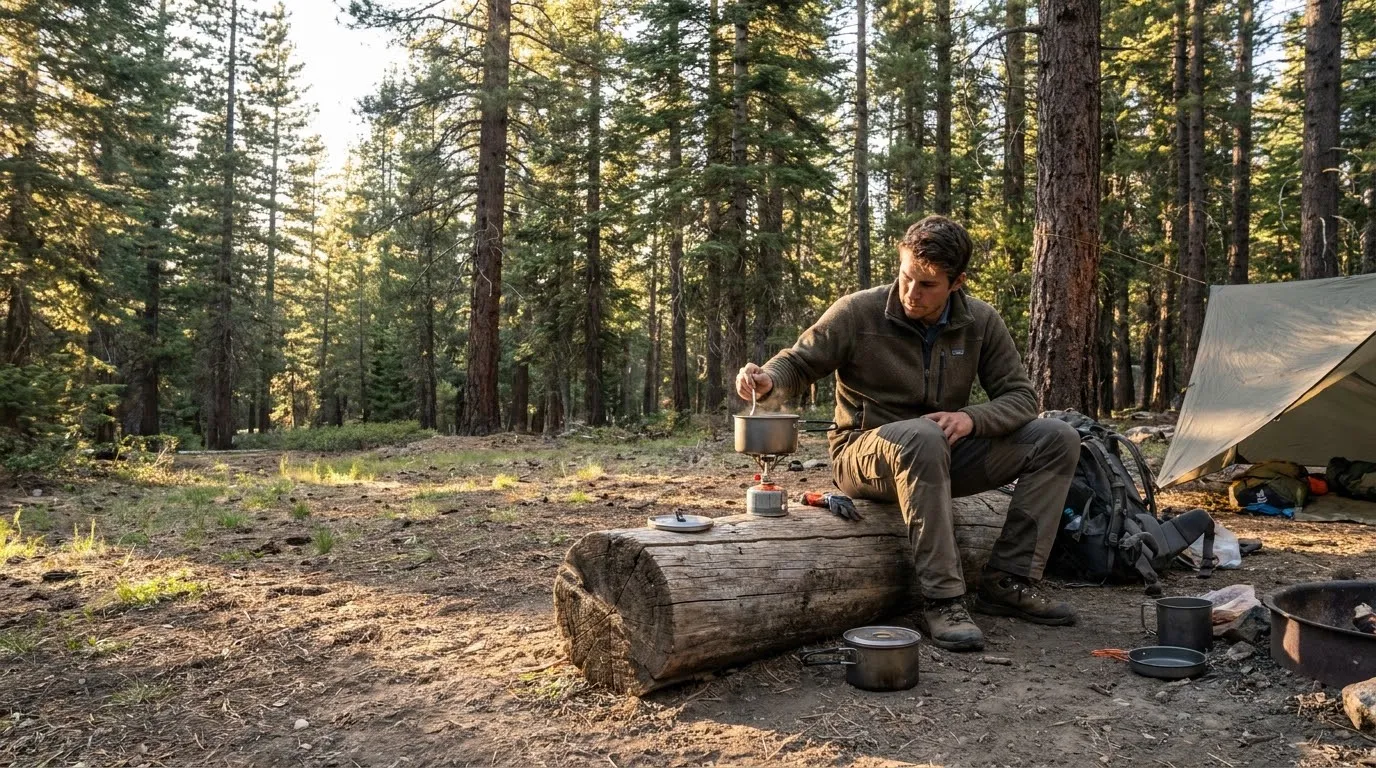
A cooked meal system relies on boiling water to rehydrate dried foods and prepare hot drinks:
- Hardware required: A compact canister stove (2.5 to 3.5 oz / 71 to 99 g), a lightweight titanium cook pot with lid (3.5 to 5.5 oz / 99 to 156 g), an isobutane-propane fuel canister (7.0 oz / 198 g full for a 100 g fuel net canister), and a mini lighter (0.4 oz / 11 g). Total cook kit weight ranges from 13.4 to 16.4 ounces (380 to 465 g).
- Advantages: Hot meals provide psychological comfort, especially during cold, rainy conditions. Rehydration is fast (ten to fifteen minutes), and hot water opens up a broader selection of dinner recipes.
- Disadvantages: Adds roughly one pound of baseline gear weight plus the volume of the pot and empty fuel canisters. Demands careful fuel budgeting, and windy conditions can double boil times and fuel consumption.
The no-cook backpacking strategy
The no-cook approach eliminates stoves, fuel canisters, and cooking hardware entirely. Backpackers eat shelf-stable provisions or practice cold-soaking, which uses ambient-temperature water to rehydrate foods over several hours:
- Hardware required: A wide-mouth screw-top plastic jar (such as an empty 16-ounce peanut butter or gelato jar weighing 1.5 to 1.8 oz / 43 to 51 g) and a plastic or titanium spoon (0.3 to 0.5 oz / 8 to 14 g).
- Advantages: Saves 12 to 15 ounces of baseline pack weight and significant pack space. There are no fuel canisters to purchase or dispose of. Camp setup is instant: you can eat immediately upon stopping without waiting for water to boil, and cleaning requires minimal water.
- Disadvantages: Requires planning ahead, as cold-soaking dehydrated beans, couscous, or ramen takes 45 to 90 minutes. Lacks the soothing thermal comfort of hot food during freezing mountain evenings.
| Feature | Cooked meal system | No-cook / cold-soak system |
|---|---|---|
| Gear weight | 13 to 17 oz (stove, pot, fuel, lighter) | 1.8 to 2.3 oz (plastic jar, spoon) |
| Fuel requirements | Isobutane canister (monitored per burn) | Zero fuel required |
| Prep time at camp | 15 to 25 minutes (boiling and steeping) | Instant (or pre-soaked on trail) |
| Clean-up demand | Hot rinse, pot scraping, gray-water straining | Quick cold rinse, minimal residue |
| Cold-weather comfort | High thermal warmth and comfort | Low thermal value; relies on clothing |
| Meal variety | Broad (soups, freeze-dried, pasta, tea) | Moderate (wraps, bars, cold-soaked grains) |
Food storage requirements and bear canister protocols
Protecting your food supply from wilderness wildlife is an essential backcountry responsibility. When wild animals gain access to human rations, they lose their natural fear of humans, alter their foraging behavior, and often become aggressive camp pests.
National Park Service bear canister regulations
Many national parks set food-storage rules for their backcountry, and they differ by park. In Yosemite’s wilderness, for example, NPS bear storage regulations require allowed bear-resistant food canisters for food storage in all areas of the wilderness (the park publishes a list of allowed models). Canisters are required in some parks and areas but not others, so check the park’s own food-storage rules before you go.
Key regulations and considerations include:
- What counts as food: Yosemite’s regulations define “food” to include all food regardless of packaging, drinks, trash, and toiletries such as sunscreen, soap, and toothpaste, as well as medications and tobacco. Hanging, counter balancing, or guarding food, trash, or scented items is not legal there.
- Canister capacity: A standard 7.2-liter bear canister (such as the BearVault BV450, weighing 33 oz / 935 g) holds approximately three to four days of food for one hiker. A full-size 11.5-liter canister (such as the BearVault BV500, weighing 41 oz / 1,162 g) accommodates six to eight days of compact rations.
- Camp placement: Yosemite says to keep bear canisters within eye and ear shot of your sleeping location overnight, while NPS general bear-safety advice is to place containers on flat, level ground 100 feet or more from your campsite; follow your park’s own rule. Never leave a canister near a steep drop-off, riverbank, or lake shore, where a curious bear could inadvertently bat or roll the container into water or over a cliff. Never tie ropes around the canister, which provides bears with a leverage handle to drag the canister away.
Food hanging where canisters are not required
In backcountry areas where bear canisters are not legally mandated and sturdy trees are present, hikers may use the counter-balance hanging method. Suspend your food bag at least 12 feet off the ground, 6 feet out from the main trunk, and 6 feet below the supporting limb. Note that many national forests now strongly discourage tree hangs because habituated black bears have learned to bite through hanging ropes.
Step-by-step method for packing backpacking food by day
Proper packing organization keeps your food protected, easily accessible, and simple to track over the course of a multi-day journey.
1. Repackage grocery items to eliminate bulk
Commercial packaging contains unnecessary cardboard boxes, excess plastic wrap, and trapped air. Repackage individual meals into quart-sized freezer bags. Use a fine-point permanent marker to write the meal name, date, and required ounces of water directly on the bag. This practice reduces food volume by up to thirty percent and eliminates trash before reaching the trailhead.
2. Organize daily rations into gallon freezer bags
Group all food for each individual day into a clear one-gallon zip-top freezer bag labeled Day 1, Day 2, Day 3, and so forth. Each daily bag contains:
- Morning breakfast packet and instant coffee
- Daytime snacks, jerky, nut packs, and lunch wrap ingredients
- Evening dinner pouch and dessert
This method prevents tearing through your entire food stash to locate a mid-morning snack. When planning your route, check our complete backpacking checklist to confirm all supporting shelter and camp gear aligns with your trip schedule.
3. Pack food strategically inside your backpack
To maintain balance and reduce strain on your lower back, place heavy items close to your spine in the vertical center of your backpack. For detailed loading instructions, read our guide on how to pack a backpack.
- Daytime snacks: Keep current-day snacks, energy bars, and lunch tortillas inside your backpack top lid or exterior hip-belt pockets for easy access without unbuckling your main pack.
- Bear canister: Pack the canister upright in the center of your main pack body, resting directly above your compressed sleeping bag compartment. Surround the hard canister with your tent body or spare insulating clothes to prevent rigid edges from rubbing against your back.
4. Food cleanup and Leave No Trace trail ethics
Leaving food scraps or greasy dishwater near campsites degrades wild lands and attracts rodents and bears. Follow Leave No Trace ethics for camp cleanup:
- Pack it in, pack it out: Never bury food waste, energy bar corners, or citrus rinds in catholes. Pack a dedicated heavy-duty odor-proof trash bag to carry every wrapper and scrap back to municipal waste bins.
- Wash dishes away from water: Wash pots and utensils at least 200 feet away from natural lakes and streams using biodegradable soap.
- Strain gray water: Pour dishwater through a mesh bandana or small wire strainer to catch food particles, packing out the solids with your garbage, and broadcast the strained water over mineral soil well away from camp.
Frequently asked questions
How many calories per day do you need while backpacking?
Most adult backpackers require between 2,500 and 4,500 calories per day depending on body mass, pack weight, daily hiking distance, and total trail elevation gain. A gentle weekend hike on level terrain typically burns around 2,500 to 3,000 calories. Demanding alpine routes covering ten or more miles with steep mountain climbs can elevate energy needs well past 4,000 calories per day.
What are the pros and cons of a no-cook backpacking menu?
A no-cook menu eliminates the stove, titanium cook pot, and fuel canisters, saving ten to sixteen ounces of baseline pack weight and removing the chore of boiling water after a grueling hike. However, no-cook menus lack the psychological comfort and warmth of a hot evening meal or morning coffee, and cold-soaked grains require advance rehydration planning several hours before mealtime.
Why do national parks require hard-sided bear canisters?
Some parks, such as Yosemite, require approved bear-resistant canisters in their wilderness because bears quickly learn to associate human camps with food. Once conditioned, bears can defeat traditional counter-balance tree hangs, damaging equipment and creating human safety hazards. Hard-sided canisters deny bears a caloric reward, protecting hikers and preventing wildlife management rangers from needing to euthanize habituated animals.
What items must go into a bear canister overnight?
Where canisters are required, as in Yosemite, parks ask you to store anything with an odor in the canister, and to check the park's own rules before your trip. That typically includes all food, freeze-dried pouches, trail snacks, trash wrappers, cooking pots, utensils, and stoves. It also covers scented personal items such as toothpaste, sunscreen, lip balm, insect repellent lotions, soap, hand sanitizer, and scented medications or ointments.
How do you organize backpacking food by day?
Pack individual days into heavy-duty gallon zip-top freezer bags labeled Day 1, Day 2, and Day 3. Each daily bag contains your breakfast, daytime trail snacks, and dinner. Keep each day's snacks accessible in your pack lid or hip-belt pockets, and pack the remainder inside your bear canister positioned vertically in the center of your backpack.
How much does a typical day of backpacking food weigh?
A balanced backpacking menu averages between 1.5 and 2.5 pounds of dry food per person per day. By selecting calorie-dense staples providing 100 to 140 calories per ounce—such as nuts, seeds, peanut butter, hard cheeses, and dehydrated meals—you can easily fulfill a 3,500-calorie daily target while keeping total daily food weight near 1.8 to 2.0 pounds.