Camping with kids checklist for family trips
A camping with kids checklist builds on standard family car-camping gear by adding child-sized sleep systems, extra weather layers, simple camp foods, and clear campsite boundary rules. Packing double the usual socks and base layers, bringing familiar bedtime comfort items, and assigning age-appropriate camp chores keeps children warm, engaged, and rested from tent setup through campfire cleanup.
On this page
Planning a smooth family camping trip
Camping with children turns an ordinary weekend into an outdoor adventure away from digital screens, but it requires thoughtful staging before you leave the driveway. Our trip-planning checklists break outdoor preparation into clear systems so nothing critical stays behind on the garage floor. When you build on a standard car camping checklist with kid-sized sleep gear, extra weather layers, easy meals, and clear safety boundaries, you spend less time searching through duffel bags and more time exploring the trail.
The National Park Service guide to camping with kids recommends involving children directly in the packing and camp setup process. Asking kids what layers they need for warm afternoons and chilly nights teaches them self-reliance, while pairing the National Park Service Ten Essentials with the Leave No Trace Seven Principles introduces outdoor stewardship early.
Change Gear earns a commission when you buy through some links on this page, at no cost to you. It never decides what we recommend.
Family shelter and kid-friendly sleep systems
Children lose body heat faster than adults when sleeping on cold ground and often struggle to stay warm inside oversized adult sleeping bags. Size your tent generously so everyone has room to dress and play indoors if a rainstorm rolls through.
- Six-person to eight-person family cabin or dome tent (16 to 32 lbs / 7.3 to 14.5 kg): High-ceiling shelter with a full-coverage waterproof rainfly, vestibule storage for muddy boots, and mesh roof panels for ventilation. Compare standing-height 4-to-8-person cabin and dome models in our guide to the best family camping tents. If your group prefers lighter shelter setups, compare options in our guide to the best ultralight tents.
- Heavy-duty tent footprint and entry welcome mat (2 to 4 lbs combined / 0.9 to 1.8 kg): A waterproof groundsheet under the tent floor plus a woven mat outside the door where kids can sit to remove dirty shoes before unzipping the screen.
- Youth insulated sleeping bags (20 to 30 degrees Fahrenheit rating) (2.0 to 3.5 lbs each / 0.9 to 1.6 kg): Shorter ~60-inch length bags or adjustable-footbox bags that prevent heat from dissipating into empty fabric space at the bottom. For infants and toddlers, use wearable fleece sleep sacks rather than loose blankets.
- Insulated foam or self-inflating sleeping pads (1.2 to 4.5 lbs each / 0.54 to 2.0 kg): Closed-cell foam pads (which cannot puncture when kids bounce on them) or self-inflating mattresses with an R-value of 3.0 to 5.0 to block conductive ground chill.
- Extra fleece or wool camp blankets (2 to 4 lbs / 0.9 to 1.8 kg): Layered over sleeping bags on frosty mountain nights or spread on the tent floor for afternoon quiet time.
- Favorite pillow and comfort item from home (8 to 20 oz / 227 to 567 g): A familiar bedtime stuffed animal, small blanket, or pillowcase helps children settle quickly amid unfamiliar forest sounds.
- Portable travel camp crib or playpen (for babies and toddlers) (11 to 15 lbs / 5.0 to 6.8 kg): Mesh-sided folding sleeper that fits inside a standing-height family cabin tent and provides a safe play space while adults pitch camp.
- Mini hand broom and dustpan (6 to 10 oz / 170 to 283 g): Lets kids take charge of sweeping pine needles, sand, and crumbs out of the tent each morning.
Layered clothing and footwear for kids
Young campers get wet and muddy quickly around creeks, dew-soaked grass, and picnic tables. Organize each child’s clothing inside a color-coded packing cube or mesh duffel so they can find their own socks and shirts without emptying the entire bag.
- Synthetic or merino wool base layers (2 to 3 sets) (3 to 6 oz per piece / 85 to 170 g): Long-sleeve thermal tops and leggings that wick moisture during active play and double as warm pajamas at night.
- Quick-dry nylon hiking pants and shorts (6 to 12 oz each / 170 to 340 g): Durable stretch woven pants that protect knees from scrapes and dry rapidly after creek walks.
- Fleece zip-up jackets or hoodies (2 per child) (7 to 14 oz each / 198 to 397 g): Easy-to-layer midweight warmth; packing a backup fleece ensures a dry layer if one gets smoky or spilled on at dinner.
- Insulated puffy jacket (8 to 14 oz / 227 to 397 g): Packable synthetic insulated jacket for crisp mornings and stargazing after sunset.
- Waterproof rain jacket and rain pants (8 to 14 oz combined / 227 to 397 g): Seam-sealed outer layers that let kids play outside in damp weather and keep mud off inner clothes.
- Wool blend hiking socks (2 pairs per day) (1.5 to 3.0 oz per pair / 43 to 85 g): Cushioned merino wool socks that prevent blisters and keep feet warm even if stepped into a puddle. See our guide to the best hiking socks for material tips.
- Closed-toe trail sneakers or kids’ hiking boots (12 to 24 oz per pair / 340 to 680 g): Broken-in footwear with grippy rubber soles for trail hikes and campsite play. Enforce a closed-toe shoe rule around camp to prevent stubbed toes and splinters.
- Slip-on camp shoes or water sandals (8 to 14 oz per pair / 227 to 397 g): Kept right at the tent door for quick bathroom trips and supervised wading.
- Wide-brim sun hat, warm beanie, and mittens (3 to 6 oz total / 85 to 170 g): Protects against midday UV exposure and nighttime heat loss.
Family camp kitchen and kid-friendly food
Hungry children tire quickly after an afternoon of outdoor play, so plan meals that cook rapidly and let kids participate safely. See the National Park Service camping with kids tips for involving older children in meal prep and dishwashing while younger kids fill water bottles.
- Two-burner propane camp stove and fuel (10 to 14 lbs / 4.5 to 6.4 kg): Boils water for oatmeal, pasta, or hot cocoa in minutes even when campfire bans are in effect.
- Hard-sided cooler with block ice (9 to 25 lbs empty / 4.1 to 11.3 kg): Keeps milk, cheese, cut fruit, and meats below 40 degrees Fahrenheit. Store a separate small beverage cooler for kids’ drinks and snacks so the main food cooler stays latched.
- Color-coded unbreakable plates, bowls, mugs, and sporks (1 to 2.5 lbs set / 0.45 to 1.1 kg): Polypropylene or stainless steel tableware in distinct colors so each child easily identifies their own cup and plate.
- Telescoping stainless steel roasting forks (8 to 14 oz set / 227 to 397 g): Long-handled forks (extending to 30 to 34 inches) with blunt safety tips that allow kids to roast hot dogs and marshmallows at a safe distance from campfire heat.
- Collapsible five-gallon water dispenser with spigot (1 to 2 lbs empty / 0.45 to 0.9 kg): Placed at the edge of the picnic table with a catch bucket underneath so kids can wash sticky hands independently.
- Pre-prepped meals and grab-and-go trail snacks: Pre-chop vegetables, marinate proteins, and pre-mix pancake batter in squeeze bottles at home. Stock plenty of string cheese, apple slices, crackers, nut-butter pouches, trail mix, and s’mores ingredients.
- Two wash basins, biodegradable soap, and drying rack (1.5 to 2.5 lbs total / 0.68 to 1.1 kg): Set up at child height so older kids can scrub and rinse camp dishes.
Health, hygiene, and campsite safety gear
Outdoor safety with children relies on clear visibility, sun and bug protection, and a stocked medical kit.
- Family first aid kit with pediatric supplies (1.0 to 1.8 lbs / 0.45 to 0.82 kg): Include assorted fabric bandages, antiseptic wipes, blister moleskin, fine-point tick tweezers, oral thermometer, children’s dose pain reliever and antihistamine, and hydrocortisone cream. Use our complete hiking first aid kit checklist to verify every supply.
- Broad-spectrum SPF 30+ mineral sunscreen and Picaridin insect repellent (4 to 8 oz / 113 to 227 g): Apply before morning hikes and reapply after water play.
- Unscented baby wipes, hand sanitizer, and travel potty (1 to 4 lbs / 0.45 to 1.8 kg): Wipes clean muddy hands and faces before bed, while a compact folding travel potty with disposable absorbent liners simplifies nighttime bathroom trips for toddlers.
- Kid-sized LED headlamps and glow sticks (2 to 3 oz per headlamp / 57 to 85 g): Give every child a personal headlamp with a red-light mode so they do not blind campmates, and clip a glow stick or low-output marker light to tent guy lines to prevent tripping after dark.
- Pealess emergency whistle on a breakaway lanyard (0.3 to 0.5 oz each / 9 to 14 g): Worn by every child on the trail and around camp. Teach children that the whistle is strictly for emergencies, using three loud blasts if they ever lose sight of the group.
- Framed child carrier backpack (for toddlers on hikes) (5.0 to 7.9 lbs empty / 2.3 to 3.6 kg): Adjustable aluminum-frame carrier with a five-point child harness, stirrups, and built-in sunshade for carrying children (typically 16 to 40 pounds) on family trails.
- Youth daypack (10 to 18 liters) (8 to 16 oz empty / 227 to 454 g): Sized for kids ages five and up to carry their own water bottle, rain jacket, snack, and whistle on short nature walks.
Campsite safety rules and Leave No Trace with kids
Before unloading gear, gather the family for a five-minute campsite orientation covering camp rules you set for your family, the NPS Junior Ranger Park Explorer safety tips (stay with your group, do not touch or feed animals), and Leave No Trace habits:
- Define visual campsite boundaries: Point out clear landmarks, such as two large pine trees, the driveway post, and the picnic table, and require kids to stay inside that perimeter unless accompanied by an adult.
- Use the buddy system: Children never walk to the campground restroom, water pump, or amphitheater alone.
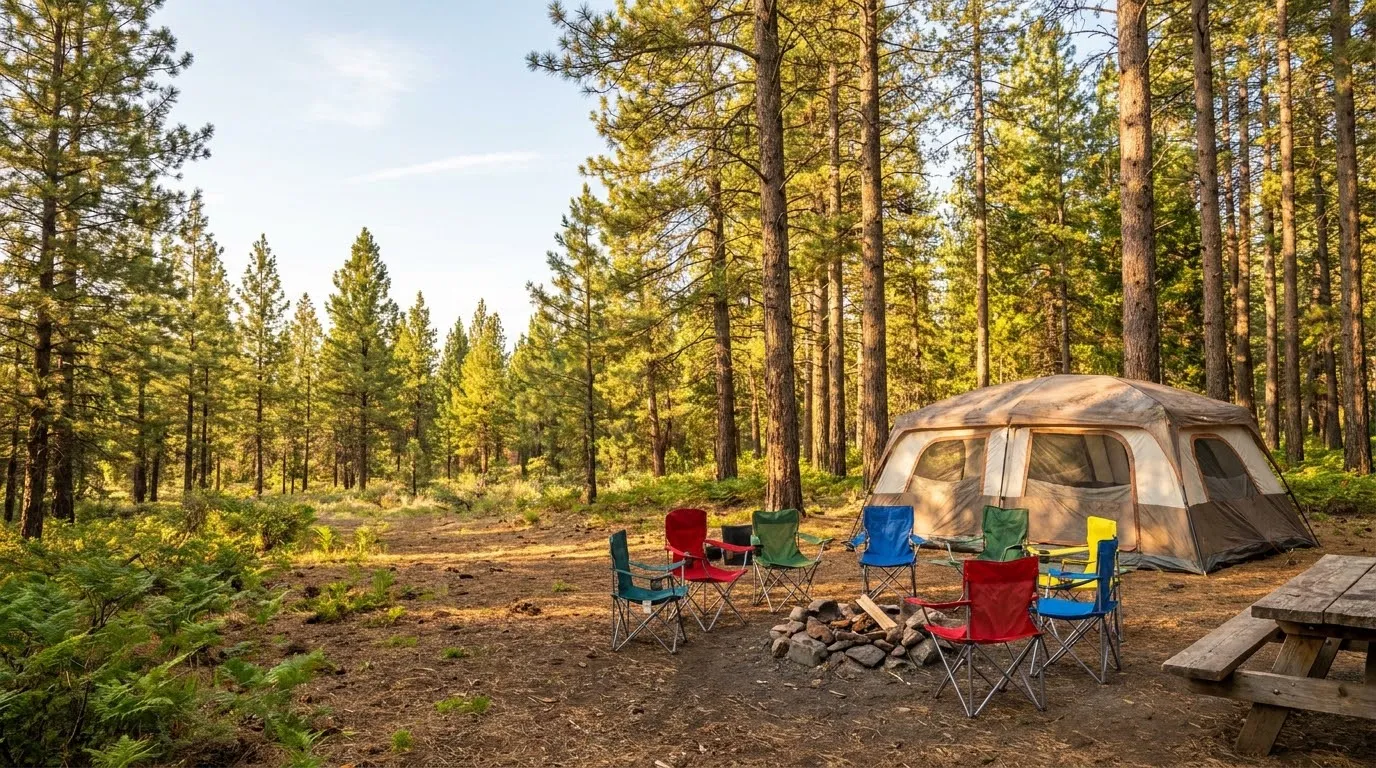
- Respect the campfire circle: Establish a three-foot stone ring or chair perimeter around the fire pit where running and horseplay are never allowed. Never leave a campfire unattended, and drown embers thoroughly with water until cold to the touch.
- Keep wildlife wild: Teach children never to feed or approach squirrels, chipmunks, birds, deer, or bears. Store all food, coolers, wrappers, and scented toothpaste inside your locked vehicle or campground bear locker immediately after meals, and never inside a tent.
- Leave natural treasures on the trail: Encourage kids to photograph or sketch pinecones, wildflowers, rocks, and feathers rather than putting them in their pockets, preserving the park for future visitors.
Engaging camp activities and the Junior Ranger program
Structured downtime prevents boredom during camp setup and afternoon rest hours. As the National Park Service Junior Ranger guide highlights, national and state parks offer free, interactive programs designed specifically for young campers:
- National Park Service Junior Ranger booklet and badge: Stop at the park visitor center upon arrival to pick up a free Junior Ranger activity book. Children complete nature observation pages, attend a ranger talk, and take the Junior Ranger pledge to earn an official park badge or patch. Ask at the visitor center what activities each park offers.
- Compact youth binoculars and magnifying glass (6 to 12 oz total / 170 to 340 g): Lets kids inspect tree bark, insects, bird plumage, and distant ridgelines on slow-paced nature trails.
- Nature scavenger hunt and sketch journal (4 to 8 oz / 113 to 227 g): A small notebook and colored pencils for checking off animal tracks, cloud shapes, and tree species while parents prepare dinner.
- Waterproof deck of cards and travel board games (4 to 12 oz / 113 to 340 g): Essential for rainy hours inside the tent or quiet afternoons at the picnic table.
- Star chart or night-sky guide: On clear evenings away from city lights, spread a blanket in an open meadow to identify constellations and planets before bedtime.
For shorter daytime outings with your family, check our day hike checklist, or customize a printable family gear sheet using our packing list tool.
Frequently asked questions
What size tent is best when camping with kids?
Choose a cabin or dome tent rated for at least two more people than your actual family size. Tent manufacturers calculate capacity by fitting narrow sleeping pads shoulder to shoulder with no floor space left for duffels, travel cribs, or rainy-day card games. A six-person or eight-person family tent with near-vertical walls and a divided room or screened vestibule gives a family of four comfortable living space.
How do you keep kids warm at night in a tent?
Ground chill is the main cause of cold sleepers, so pair every child with an insulated foam or self-inflating sleeping pad rated at an R-value of 3.0 or higher. Use a child-sized sleeping bag rated 10 to 15 degrees cooler than the lowest forecasted night temperature so their smaller body does not have to heat empty foot space. Dress kids in dry wool or synthetic thermal layers and a fleece beanie before bedtime.
How much extra clothing should you pack for kids on a camping trip?
Pack at least two full changes of underwear, socks, and base layers per day for young children, plus an extra warm fleece and waterproof rain shell. Creek splashing, muddy trails, and spilled camp meals quickly soak daytime clothes. Having dry non-cotton layers ready in a labeled packing cube ensures kids never have to climb into their sleeping bag wearing damp garments.
How do you handle nighttime bathroom trips at a campground with young kids?
Pitch your tent within an easy walk of the campground restroom without being directly next to the bathhouse door lights. Equip every child with their own low-lumen headlamp and keep slip-on camp shoes right outside the tent zipper. For toddlers who are potty training, place a compact portable travel potty lined with absorbent disposal bags inside the tent vestibule for middle-of-the-night use.
What safety rules should parents set at a campsite?
Before unpacking the vehicle, walk the campsite perimeter with your children and establish visible physical boundaries they cannot cross alone, such as a specific tree line or boulder. Enforce a strict buddy system for restroom walks, require closed-toe shoes around camp, mark a no-running stone circle around the campfire ring, and give each child a lanyard whistle to blow three times if separated.
How can you help a child who is nervous about sleeping in a tent?
Set up the tent in your backyard or living room a week before the trip so your child can practice sleeping in their bag and get used to nylon walls. The National Park Service camping-with-kids guidance suggests letting children choose an item or two that is special to them to bring along; a favorite stuffed animal or blanket can make the tent feel familiar.