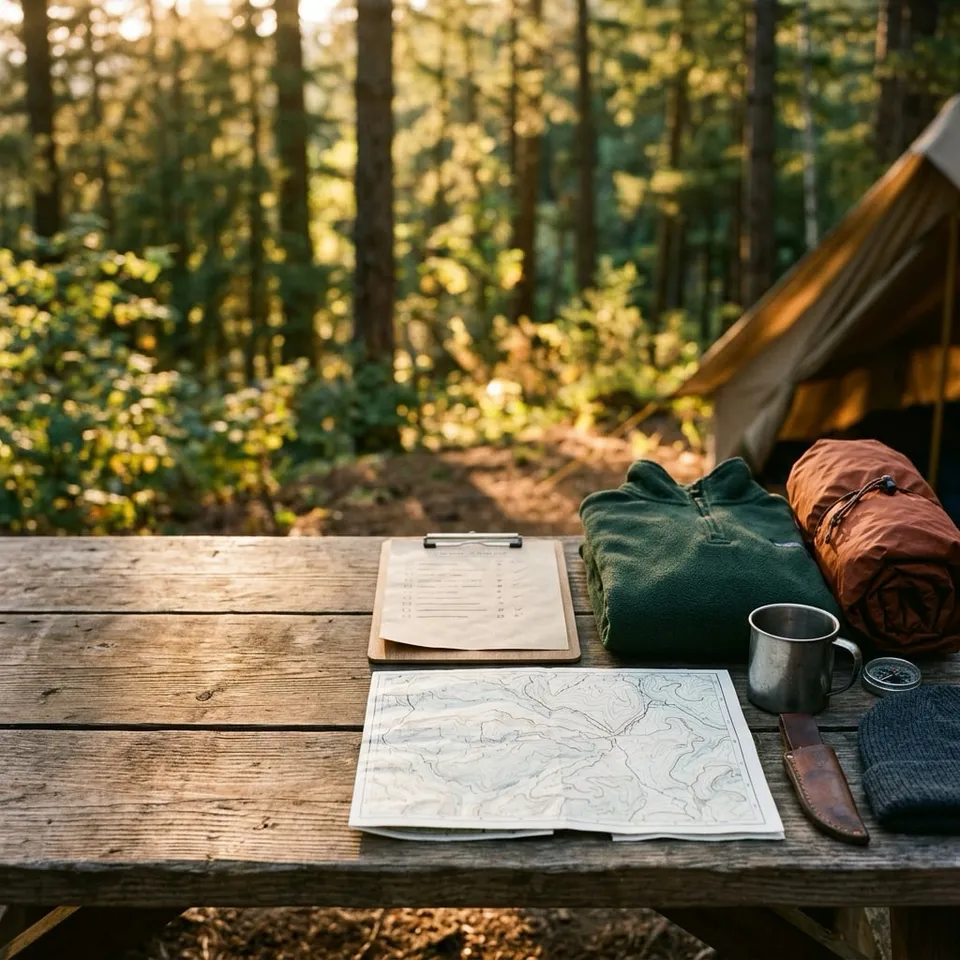
Hiking first aid kit checklist by trip length
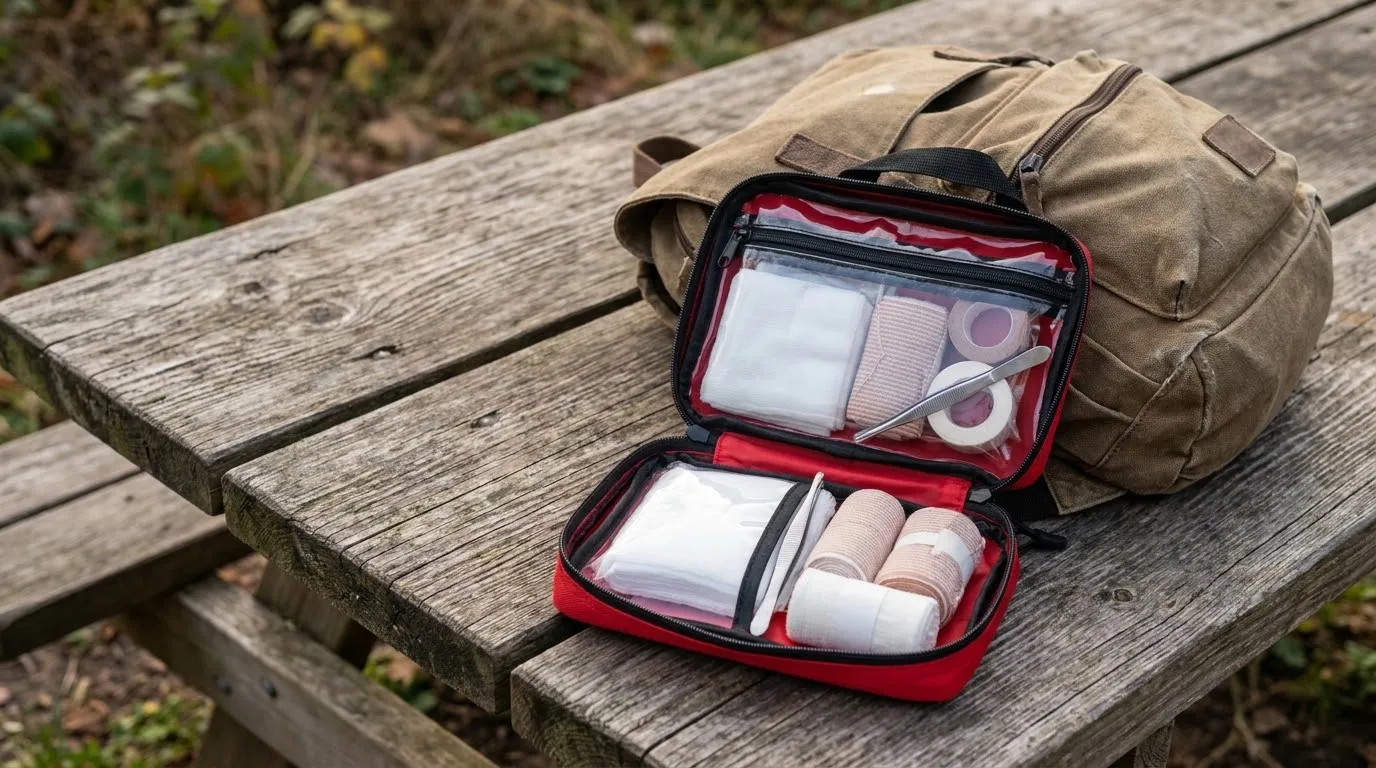
A hiking first aid kit checklist organizes wound dressings, blister care, basic over-the-counter medications, and emergency tools scaled to your trip length and group size. For a solo day hike, a compact three-to-six-ounce kit covers cuts, scrapes, foot hot spots, and minor sprains. Multi-day backpacking trips and group outings add irrigation syringes, rolled gauze, elastic wraps, splints, and extra medication doses inside a waterproof pouch.
On this page
Why every hiker needs a trail-specific medical kit
A dedicated medical pouch is a core pillar of the National Park Service Ten Essentials and a staple across all of our hiking and camping checklists. Household medicine cabinets and bulky automotive kits rarely translate well to the trail: plastic bandages peel off sweaty skin within minutes, glass ointment jars add unnecessary weight, and standard home kits lack the elastic wraps and foot-care supplies needed to walk out on a blistered heel or twisted ankle.
According to the American Red Cross hiking first aid checklist, a trail kit should be tailored to your group size, terrain, climate, remoteness, and trip length. While basic first aid supplies help manage minor wounds and stabilize injuries on the trail, they do not replace professional medical evaluation when symptoms are severe or persist. Hikers should also follow Leave No Trace principles by carrying a dedicated resealable bag to pack out all used dressings, antiseptic wrappers, and medical waste.
Change Gear earns a commission when you buy through some links on this page, at no cost to you. It never decides what we recommend.
Core wound care and bandages (all trip lengths)
Even a two-hour afternoon walk on a local park trail requires basic bleeding control and wound protection. For short day hikes (one to two people, one day), pre-packaged ultralight kits weigh 2.6 to 3.6 ounces (74 to 102 grams), such as the Adventure Medical Kits Ultralight/Watertight .3 and .5 models. Every trail kit should start with these foundational wound care items recommended by the American Red Cross:
- Waterproof storage pouch or heavy-duty dry sack (0.8 to 2.0 oz empty / 23 to 57 g): A seam-sealed silnylon pouch or heavy-duty zip-top freezer bag that keeps sterile paper packaging dry during stream crossings and rainstorms.
- Assorted fabric adhesive bandages (0.3 to 0.6 oz for 10 to 25 bandages / 9 to 17 g): Woven fabric bandages flex with knuckle and joint movement and adhere far better to damp skin than rigid plastic strips.
- Sterile gauze pads (3 x 3 inch and 4 x 4 inch) (0.4 to 0.8 oz for 6 to 10 pads / 11 to 23 g): Used for applying direct pressure to bleeding scrapes, cleaning cuts, and dressing larger abrasions.
- Non-adherent sterile dressings (0.2 to 0.4 oz / 6 to 11 g): Prevents gauze from sticking to raw abrasions or oozing blisters during multi-hour walks back to the trailhead.
- Wound closure strips (butterfly bandages) (0.1 oz / 3 g): Narrow adhesive strips that pull the edges of clean, straight cuts together to reduce gaping until a clinician can evaluate the wound.
- Cloth medical adhesive tape (1 inch wide) (0.5 to 1.2 oz per roll / 14 to 34 g): Secures gauze dressings, reinforces ankle wraps, and covers foot hot spots.
- Antiseptic wipe packets (0.3 to 0.6 oz for 5 to 10 wipes / 9 to 17 g): Benzalkonium chloride (BZK) or alcohol cleansing pads for disinfecting skin around cuts and scrapes.
- Antibiotic ointment packets (0.2 to 0.4 oz for 3 to 5 single-use 1 g packets / 6 to 11 g): Protects minor cuts and abrasions from bacterial infection underneath dressings.
- Non-latex nitrile examination gloves (0.4 to 0.7 oz for 1 to 2 pairs / 11 to 20 g): Protects both the caregiver and the injured hiker from bloodborne pathogens and trail dirt when dressing wounds.
Blister prevention and foot care supplies
Foot friction is one of the most frequent issues on both day hikes and multi-day treks. Wearing properly fitted footwear and moisture-wicking wool socks, covered in our guide to the best hiking socks, reduces friction, but every hiker should carry a dedicated foot-care sub-kit:
- Pre-cut moleskin pads and strips (0.4 to 0.8 oz / 11 to 23 g): Soft cotton flannel backing with strong adhesive that absorbs shear forces over heels, bunions, and toes.
- Hydrogel or hydrocolloid blister bandages (0.4 to 0.8 oz for 4 to 6 pads / 11 to 23 g): Cushioned gel dressings that soothe already-formed blisters and protect raw skin from boot rub.
- Kinesiology tape or paper-backed blister tape (0.5 to 1.0 oz / 14 to 28 g): Thin, low-friction synthetic tape applied smoothly over hot spots before a blister bubble develops.
- Compound tincture of benzoin ampules (0.1 to 0.2 oz / 3 to 6 g): Topical skin tackifier swabbed around a hot spot so moleskin and medical tape stay bonded even when feet sweat.
Basic trail blister care steps
- Stop at the first sign of a hot spot: When you feel localized warmth or rubbing inside your boot, pause immediately. Removing your boot for two minutes to apply tape prevents a blister that could sideline you for days.
- Clean and dry the skin: Wipe away grit and sweat with an antiseptic wipe and let the skin air-dry completely so adhesives bond firmly.
- Protect intact blisters: If a fluid-filled blister has already formed and is small, leave the roof of skin intact because it serves as a sterile natural barrier against trail bacteria. Cut a ring or donut shape out of thick moleskin, place the hole over the blister dome to relieve direct pressure, and seal it with tape.
- Manage torn or draining blisters hygienically: If a blister has burst on its own, leave the overlying skin flap in place, wash the area with clean water or an antiseptic wipe, apply a dab of antibiotic ointment, and cover with a hydrogel pad or non-stick sterile gauze secured with cloth tape.
Over-the-counter medications and treatments
Carry single-dose foil blister packs or clearly labeled waterproof vials showing the medication name, active ingredient strength, dosing instructions, and expiration date. Keep all personal prescriptions, such as asthma inhalers or prescribed epinephrine auto-injectors, in their original pharmacy-labeled containers. Note that aspirin should only be considered for adults and never given to children or teenagers.
- Pain relievers and anti-inflammatories (ibuprofen, acetaminophen, or adult aspirin) (0.2 to 0.5 oz / 6 to 14 g): Helps manage headache, muscle soreness, joint inflammation, or fever during a walk out. Specifically include two 81 mg adult aspirin packets as recommended in the Red Cross standard kit list. Don’t give aspirin to children or teenagers, and follow the label or a doctor’s advice for any medication.
- Antihistamine tablets (diphenhydramine or cetirizine) (0.1 to 0.3 oz / 3 to 9 g): Supports relief of mild seasonal allergies, hives, or localized itching from insect bites and plant contact.
- Hydrocortisone 1% cream packets and insect sting relief pads (0.2 to 0.4 oz / 6 to 11 g): Soothes localized skin irritation from mosquitoes, biting flies, stinging nettles, or poison ivy.
- Antidiarrheal tablets (loperamide) and antacid chewables (0.2 to 0.4 oz / 6 to 11 g): Prevents debilitating fluid loss from gastrointestinal upset on overnight and multi-day trips.
- Oral rehydration salt packets and glucose tablets (1.0 to 2.5 oz / 28 to 71 g): Replaces electrolytes lost through heavy sweating or stomach illness and provides fast-acting simple sugars.
- Lubricating eye drops (0.3 to 0.5 oz / 9 to 14 g): Flushes windblown dust, campfire ash, or pollen from irritated eyes.
Multi-day backpacking and group kit additions
When your itinerary moves from a half-day local trail to a multi-day trip (see our backpacking checklist), or when you lead a group of two to four hikers several hours from cell reception, scale your kit up. Multi-day kits like the Adventure Medical Kits Ultralight/Watertight .7 and .9 weigh 5.8 to 8.0 ounces (164 to 227 grams), while larger group kits weigh 14 to 24 ounces (0.88 to 1.5 pounds). Add these structural support and wound-cleaning supplies listed by the American Red Cross:
- Absorbent compress dressings (5 x 9 inches) (0.6 to 1.0 oz for 2 pads / 17 to 28 g): High-capacity thick pads for controlling heavier bleeding from deep lacerations.
- Rolled gauze bandages (3-inch and 4-inch widths) (0.6 to 1.2 oz / 17 to 34 g): Holds sterile dressings securely in place on limbs where flat tape struggles to stick.
- Elastic compression wrap (ACE-style bandage) (1.5 to 2.5 oz / 43 to 71 g): Provides supportive compression for sprained ankles, strained knees, or wrist injuries, and holds splints in place.
- Moldable foam-padded aluminum splint (such as a 36-inch SAM splint) (4.0 to 5.9 oz / 113 to 167 g): Bends into rigid structural curves to immobilize suspected fractures or severe joint sprains on arms, wrists, or lower legs.
- Triangular cravat bandages (1.2 to 2.0 oz for 2 bandages / 34 to 57 g): Versatile cotton slings used to immobilize a shoulder or collarbone injury or tie improvised padding around a trekking-pole splint.
- Wound irrigation syringe with 18-gauge plastic catheter tip (0.8 to 1.2 oz / 23 to 34 g): Uses treated drinking water to generate a focused high-pressure stream that flushes grit, bark, and bacteria out of deep scrapes before bandaging.
First aid tools, instruments, and emergency reference
Small instruments allow you to remove splinters and ticks cleanly, cut clothing away from an injury without risking a blade slip, and document symptoms for rescue personnel.
- Fine-point stainless steel tweezers (0.4 to 0.8 oz / 11 to 23 g): Essential for grasping wood splinters, cactus spines, and embedded ticks close to the skin surface without squeezing the tick’s body.
- Blunt-tip trauma shears or compact medical scissors (1.0 to 2.2 oz / 28 to 62 g): Cuts through thick hiking socks, denim, medical tape, and gauze safely away from the skin.
- Safety pins (0.1 oz for 3 to 6 pins / 3 g): Secures elastic bandages, fashioning arm slings from a jacket hem, or repairing torn pack straps.
- CPR breathing barrier with one-way valve (0.5 to 1.2 oz / 14 to 34 g): Compact pocket mask shield for administering rescue breaths safely.
- Non-mercury digital oral thermometer (0.4 to 0.7 oz / 11 to 20 g): Checks whether a shivering or feverish campmate has an abnormal body temperature.
- Emergency heat-reflecting blanket (2.0 to 3.5 oz / 57 to 99 g): Wraps around an injured, stationary hiker to prevent rapid heat loss and shock while awaiting evacuation. If you need two-way satellite messaging to coordinate an evacuation outside cell reception, see our Garmin inReach Mini 2 vs ZOLEO comparison. For freezing conditions, see our winter hiking checklist for upgraded bivy shelters.
- Wilderness first aid pocket guide, waterproof notepad, and pencil (1.5 to 3.0 oz / 43 to 85 g): Quick-reference instructions for field care plus a waterproof card to record the time of injury, vital signs, and any medications given so you can hand an accurate timeline to search and rescue medics.
How to choose the right first aid training
Carrying medical supplies is only effective when you know how to use them calmly. Accredited outdoor and emergency organizations offer tiered courses depending on how far you travel from definitive medical care:
- Standard First Aid, CPR, and AED (4 to 6 hours): Offered online and in person by the American Red Cross, this foundational course covers cardiac emergencies, choking, controlling life-threatening bleeding, and basic wound and burn care when calling 911 brings an ambulance within minutes.
- Wilderness and Remote First Aid (WFA) (typically a multi-day course): Taught by the American Red Cross, NOLS Wilderness Medicine, and Wilderness Medical Associates, WFA is designed for day hikers, backpackers, and trip leaders who venture more than an hour away from road access. Hands-on scenarios teach structured patient assessment, spinal stabilization, improvised splinting with trekking poles and foam pads, prolonged wound care, environmental emergencies (hypothermia, heat exhaustion, altitude illness), and evacuation decision-making.
- Wilderness First Responder (WFR) (70 to 80 hours, typically 8 to 10 days): The comprehensive standard for professional guides, search and rescue volunteers, and expedition leaders traveling on multi-week remote journeys.
Review our day hike checklist to see how your medical kit integrates with the rest of your pack, or use our packing list tool to generate a complete gear sheet for your upcoming trip.
Frequently asked questions
How much should a hiking first aid kit weigh?
Kit weight depends directly on trip duration and group size. Ultralight solo day-hike kits such as the Adventure Medical Kits Ultralight/Watertight .3 and .5 weigh between 2.6 and 3.6 ounces. Multi-day kits for two to four hikers typically weigh 5.8 to 10 ounces, while comprehensive group or car-camping kits like the American Red Cross 73-piece and 93-piece kits weigh between 0.88 and 1.5 pounds.
Should you buy a pre-packaged first aid kit or build your own?
Starting with a pre-packaged hiking first aid kit gives you a lightweight, organized waterproof pouch stocked with sterile dressings, bandages, antiseptic wipes, and tweezers. However, pre-made kits rarely include enough blister treatment for rugged boots, nor do they contain your personal prescription medications. The most reliable approach is buying a pre-made base kit and customizing it with extra moleskin, hydrocolloid pads, and personal medications.
What are the most common injuries on hiking trails?
According to the American Red Cross, falls from tripping on roots or slipping on wet rocks are the leading cause of trail injuries. Other frequent hiking ailments include friction blisters on the heels and toes, sprained ankles, knee strains, minor cuts and scrapes, insect bites or stings, dehydration, sunburn, and contact reactions from poison ivy or poison oak.
How do you prevent and care for a foot blister on a hike?
Prevention starts with wearing broken-in footwear and moisture-wicking merino wool or synthetic socks. The moment you feel a warm rubbing sensation, known as a hot spot, stop hiking immediately, dry the skin, and cover the spot with moleskin, blister tape, or a hydrocolloid pad. If an intact blister has already formed, leave the skin roof intact to protect against infection and surround it with a donut-shaped moleskin pad.
How often should you inspect and restock a hiking first aid kit?
Check your first aid kit regularly and before each major hiking trip. Check the printed expiration dates on all over-the-counter pain relievers, antihistamines, antibiotic ointments, and epinephrine auto-injectors. Replace any bandages whose sterile paper wrappers have been punctured, dampened, or crushed inside your backpack.
What first aid training should hikers take before backcountry trips?
Day hikers on front-country trails benefit from a standard American Red Cross First Aid, CPR, and AED course, which teaches bleeding control and sudden illness response when emergency services can reach you quickly. Hikers and backpackers traveling more than an hour from road access should take a Wilderness First Aid (WFA) course, which covers patient assessment, improvised splinting, and evacuation decisions in remote settings.