Layering for hiking: how to build a base, mid and shell system
Layering for hiking uses three adaptable clothing tiers to regulate body temperature and moisture: a next-to-skin base layer (merino wool or synthetic) that pulls sweat off your skin, an insulating midlayer (fleece, down or synthetic fill) that traps warm air, and a weather-resistant or waterproof outer shell that blocks wind, rain and snow. Avoid cotton entirely, and add or remove layers early as your exertion and trail conditions shift.
On this page
How the three-layer hiking system works
Out on the trail, your body and the weather rarely stay still for an hour at a time. You might start in a shaded canyon at 42 degrees, climb 1,500 feet in direct sun while generating intense body heat, and then step onto a windy ridge where rain moves in. Choosing one heavy coat forces an all-or-nothing choice between overheating on the climb and freezing at the summit. Building your clothing around proven hiking gear principles solves that problem by splitting warmth and weather protection across separate, lightweight garments.
According to Arc’teryx’s technical layering guide, a complete outdoor system relies on three distinct tiers working together:
- The base layer (moisture management): Worn directly against your skin to pull liquid sweat away from your body and spread it out so it evaporates without leaving you clammy.
- The midlayer (insulation): Worn over the base layer to trap a pocket of warm air heated by your body while allowing water vapor to pass outward.
- The outer shell (weather protection): Worn on the outside to block wind, rain and snow so external moisture and cold gusts cannot collapse the warm air trapped inside your system.
The National Park Service Ten Essentials places “Extra Clothing”—specifically a jacket, hat, gloves, rain shell and extra insulating layers matched to the most extreme conditions you could encounter—among the ten foundational survival systems every hiker should carry. Because each layer serves one job, you can wear all three during a cold storm, hike in just your base layer and shell during a windy drizzle, or move in a base layer and fleece on a crisp, dry morning.
Change Gear earns a commission when you buy through some links on this page, at no cost to you. It never decides what we recommend.
Layer 1: Base layers for moisture management
Your base layer is the foundation of trail comfort. Because it sits against your skin across your torso, legs and feet, it deals directly with every drop of sweat you produce. Arc’teryx’s backpacking clothing guide notes that a functional base layer should fit close to the body without restricting movement so the fibers can pick up perspiration immediately and move it away from your skin.
Merino wool vs. synthetic base layers
Technical base layers—including shirts, long underwear bottoms and hiking socks—are knitted from synthetic fibers, merino wool or hybrid blends of the two. Each fabric has distinct strengths on the trail:
- Merino wool: Spun from fine fleece fibers, merino wool regulates temperature across wide swings, adding warmth when temperatures drop while remaining breathable in mild sun. According to Arc’teryx’s layering advice, merino wool retains its temperature-regulating properties even when damp and naturally resists odor buildup over multi-day trips. Many hikers prefer merino blended with a small percentage of nylon or elastane for added stretch and durability.
- Synthetics (polyester, polypropylene and nylon blends): Engineered synthetic yarns combine hydrophobic (water-repelling) and hydrophilic (water-moving) fibers to pull sweat off the skin and spread it across the fabric surface for rapid evaporation. Arc’teryx notes that synthetics dry faster than wool and handle high-output activities like steep climbing or trail running with minimal moisture retention. On cold days with lower exertion, lofted microfleece synthetic base layers trap extra warmth right against the skin.
Why you should never wear cotton hiking
Across every season and trail elevation, one fabric rule is universal: leave cotton T-shirts, denim jeans, cotton sweatshirts and cotton athletic socks at home. Both Arc’teryx and footwear maker LOWA warn against wearing cotton on the trail.
Cotton fibers soak up sweat and rainwater, hold that moisture flat against your skin and take hours to dry. When you work hard hiking uphill in a cotton shirt, the fabric saturates. The moment you pause in the shade or reach a windy pass, that wet layer cools rapidly and draws heat out of your core, creating the clammy chill behind the classic trail warning that “cotton kills.” Wet cotton also increases skin friction, leading to painful chafing on your torso and blisters inside your boots.
Layer 2: Midlayers for active and static insulation
Your midlayer is the thermostat of your clothing system. As Arc’teryx explains, the midlayer’s purpose is to trap warm air close to your torso while remaining permeable enough for moisture vapor from your base layer to escape. Because your heat output changes drastically between a steep climb and a lunch break, your midlayer is the piece you will put on and take off most often during a hike.
Fleece midlayers
Fleece jackets and pullovers create loft within a single layer of knitted polyester fabric—ranging from lightweight hollow-core grid fleeces to heavier sweater-knit styles. According to Arc’teryx, fleece is highly breathable, dries quickly and continues to insulate even when damp. Because single-layer fleece does not block wind on its own, it dumps excess heat efficiently while you are moving uphill in calm weather, and traps low-profile warmth the instant you pull a windproof or waterproof shell over it.
Down insulated jackets
When you stop moving at a cold viewpoint, set up camp on a backpacking trip or start hiking before sunrise, down insulation delivers the highest warmth-to-weight ratio and smallest packed size of any insulating material. Arc’teryx’s product guides highlight that a compressible down puffy takes up minimal room in your pack while providing immediate warmth during static rest stops. However, down feathers clump together and lose their insulating loft when wet. Keep down jackets for cold, dry conditions or static breaks, and always protect them under a waterproof hardshell if rain or wet snow begins.
Synthetic insulated jackets
Synthetic insulated jackets use continuous filament or short-staple polyester fill encased in a wind- and water-resistant shell fabric. While synthetic fill weighs slightly more and packs slightly larger than high-fill-power down, Arc’teryx notes that it retains its loft and warmth when exposed to sweat, mist or coastal humidity. Many modern active-insulation jackets pair synthetic fill around the core with breathable fleece side panels under the arms so you can hike in them without overheating.
Layer 3: Outer shells for wind, rain and snow
The outer shell shields your base and midlayer from external weather. Even the best fleece or down jacket cannot keep you warm if a 30-mile-per-hour ridge wind blows straight through the fabric or a rainstorm soaks the insulation.
Softshells and windshells vs. waterproof hardshells
Choosing the right outer layer comes down to whether you face light, windy conditions or sustained precipitation:
- Softshells and windbreakers: Softshells use stretchy, tightly woven fabrics treated with a Durable Water Repellent (DWR) finish. Arc’teryx explains that softshells are water-resistant rather than waterproof—their seams and zippers are not sealed—so they excel at blocking wind, shedding light mist or dry snow, and breathing during active movement.
- Waterproof-breathable hardshells: For steady rain, wet snow or exposed mountain travel, you need a fully seam-sealed hardshell built with a waterproof-breathable membrane. Look for adjustable hoods that cinch cleanly without blocking your peripheral vision and underarm pit zips that let you vent steam during steep climbs. We break down how 20-denier, 30-denier, and 50-denier 3-layer H2No shells fit over fleece and synthetic midlayers in our Patagonia rain jackets review. For a spec-by-spec breakdown of two popular three-layer waterproof shells, see our Patagonia Torrentshell 3L vs Arc’teryx Beta Jacket guide.
As Arc’teryx’s backpacking checklist recommends, always pack your waterproof rain jacket near the very top of your backpack or in an outside stretch pocket so you can pull it on in seconds without unpacking the rest of your gear in a downpour.
How to adjust your layers on the trail
Owning the right garments only helps if you adjust them proactively as you hike. Many beginners dress for the cold parking lot, refuse to stop when they get warm ten minutes into the climb, and soak their clothes from the inside out.
Start cool and vent before you sweat
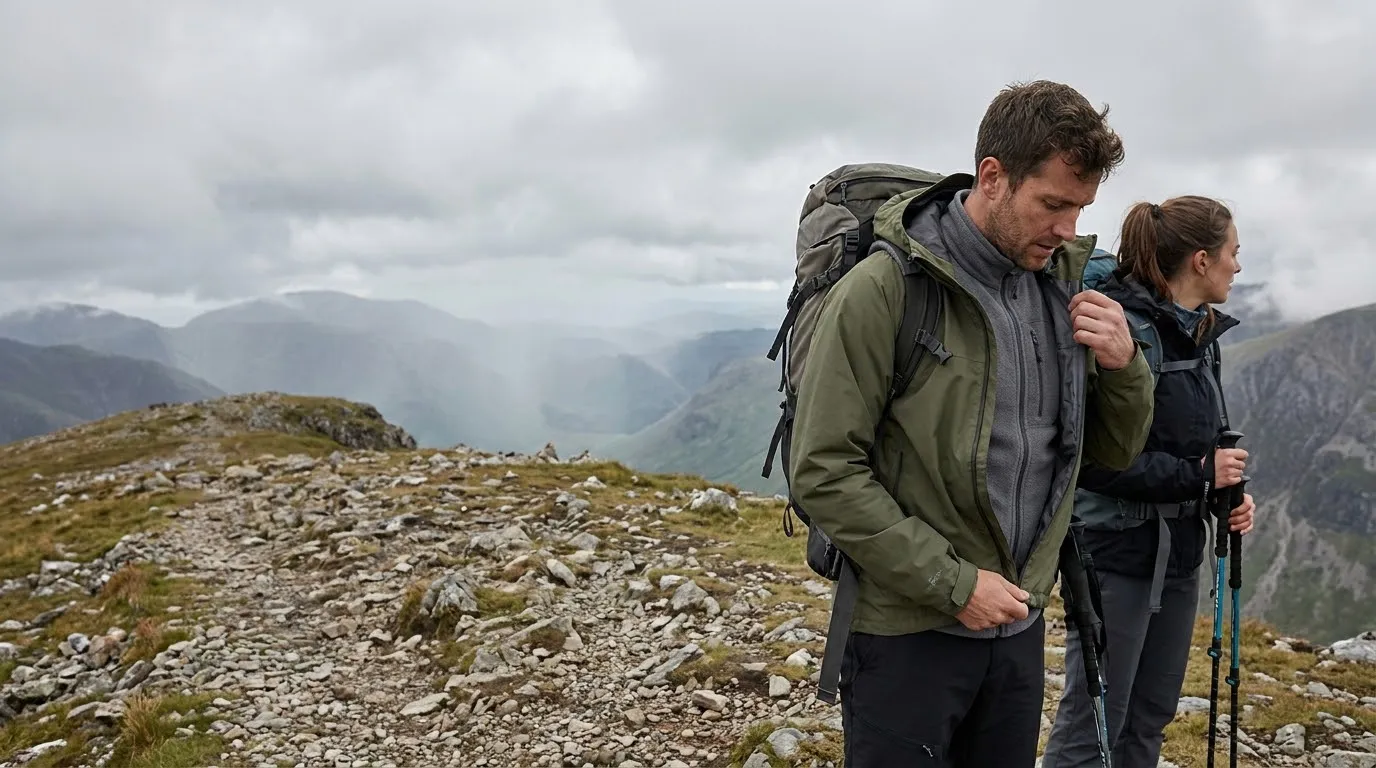
Keep the backcountry rule in mind: it is far easier to stay warm and dry than to warm up once your base layer is drenched. Unless rain or biting wind requires a shell at the trailhead, start walking in just your base layer or a light, breathable fleece so you feel slightly cool for the first ten minutes. As your heart rate climbs, use mechanical venting before taking a pack break:
- Unzip neck and pit zips: Opening a quarter-zip base layer collar and unzipping underarm shell vents dumps excess heat immediately.
- Adjust extremities first: As Arc’teryx points out, your head, neck and hands heat up and cool down rapidly. Sliding off a beanie or light gloves on an ascent or pulling up a hood on a windy traverse gives you instant micro-adjustments without stopping.
- Layer up the moment you stop: Whenever you pause for water, views or lunch, put your fleece or puffy jacket on right away to trap the heat your body just generated before you start shivering.
Packing a complete layering kit for day hikes and overnight trips
Your clothing system extends from head to toe, and a smart packing strategy separates the clothes you sweat in from the clothes that keep you warm at night. When organizing your gear with our day hike checklist, camping checklist or interactive packing list tool, apply these proven rotation habits from Arc’teryx and the National Park Service:
- Separate daytime and nighttime base layers: On multi-day trips, hike in your daytime moisture-wicking shirt, bottoms and socks, and keep one clean, bone-dry base layer set plus a dedicated sleep-only pair of merino wool socks sealed inside your pack strictly for camp and your ultralight tent.
- Rotate and air out trail socks: Carry at least two pairs of merino or synthetic hiking socks so you can swap pairs each day and clip the damp pair to the outside of your pack to dry while you walk.
- Check hood nesting before your trip: If both your insulated midlayer and your waterproof hardshell have hoods, test them together at home to make sure the inner hood nests smoothly inside the outer shell hood without binding around your neck.
- Include bright visibility and sun protection: The National Park Service recommends packing a brightly colored outer layer so Search and Rescue teams can spot you easily in an emergency, along with a sun hat, sunglasses and UPF long-sleeve shirt for high-elevation UV exposure.
Frequently asked questions
What are the 3 layers for hiking?
The three layers are the base layer, the midlayer and the outer shell. According to Arc'teryx's technical layering guides, the base layer sits snugly against your skin to move sweat away so you do not get clammy. The midlayer fits over the base to trap warm air generated by your body using fleece, synthetic fill or down. The outer shell protects the inner layers from wind, rain and snow while letting moisture vapor escape.
Why is cotton bad for hiking?
Cotton absorbs perspiration and rain right against your skin and takes a very long time to dry. Technical outdoor guides note the backcountry rule that 'cotton kills' because wet fabric against your skin strips heat away from your core when you slow down or encounter wind, raising your risk of chafing and hypothermia. Always choose merino wool or synthetic fabrics such as polyester and nylon for shirts, underwear and socks.
Should I choose a merino wool or synthetic base layer?
Both work well, so choose based on your sweat output and trip length. Synthetic base layers move heavy sweat rapidly and dry fastest, making them ideal for high-output climbs and humid day hikes. Merino wool regulates temperature naturally, retains warmth when damp and resists odor over multi-day backpacking trips, though it dries slightly slower than pure polyester and requires gentle care to prevent snags.
When should you wear fleece vs down vs synthetic midlayers?
Fleece breathes freely and dries fast, making it the best choice for active hiking in cool weather. Down puffies provide the highest warmth-to-weight ratio and pack down smallest for rest stops, windy summits and cold camp nights, but lose their loft if soaked. Synthetic insulated jackets weigh slightly more than down for the same warmth, yet keep insulating even when damp from sweat or mist.
Do I need a rain shell if the forecast is sunny?
Yes. Both the National Park Service Ten Essentials guidelines and backcountry clothing checklists recommend carrying a waterproof shell and extra layers on every hike regardless of a clear forecast. Mountain weather changes rapidly, and a waterproof shell kept in the top of your pack is ready when a sudden squall or wind chill arrives on exposed ridges.
How do I avoid sweating through my clothes when hiking uphill?
Start hiking slightly cool and adjust your layers before you overheat. As Arc'teryx advises, it is much easier to stay warm and dry than to warm back up after soaking your base layer in sweat. Open pit zips, drop your hood or stow your midlayer at the bottom of a steep climb, then put your insulating layer back on as soon as you stop for a break.